Flipflopi and IFAW sign MOU to co-create the Monsoon Winds Seascape
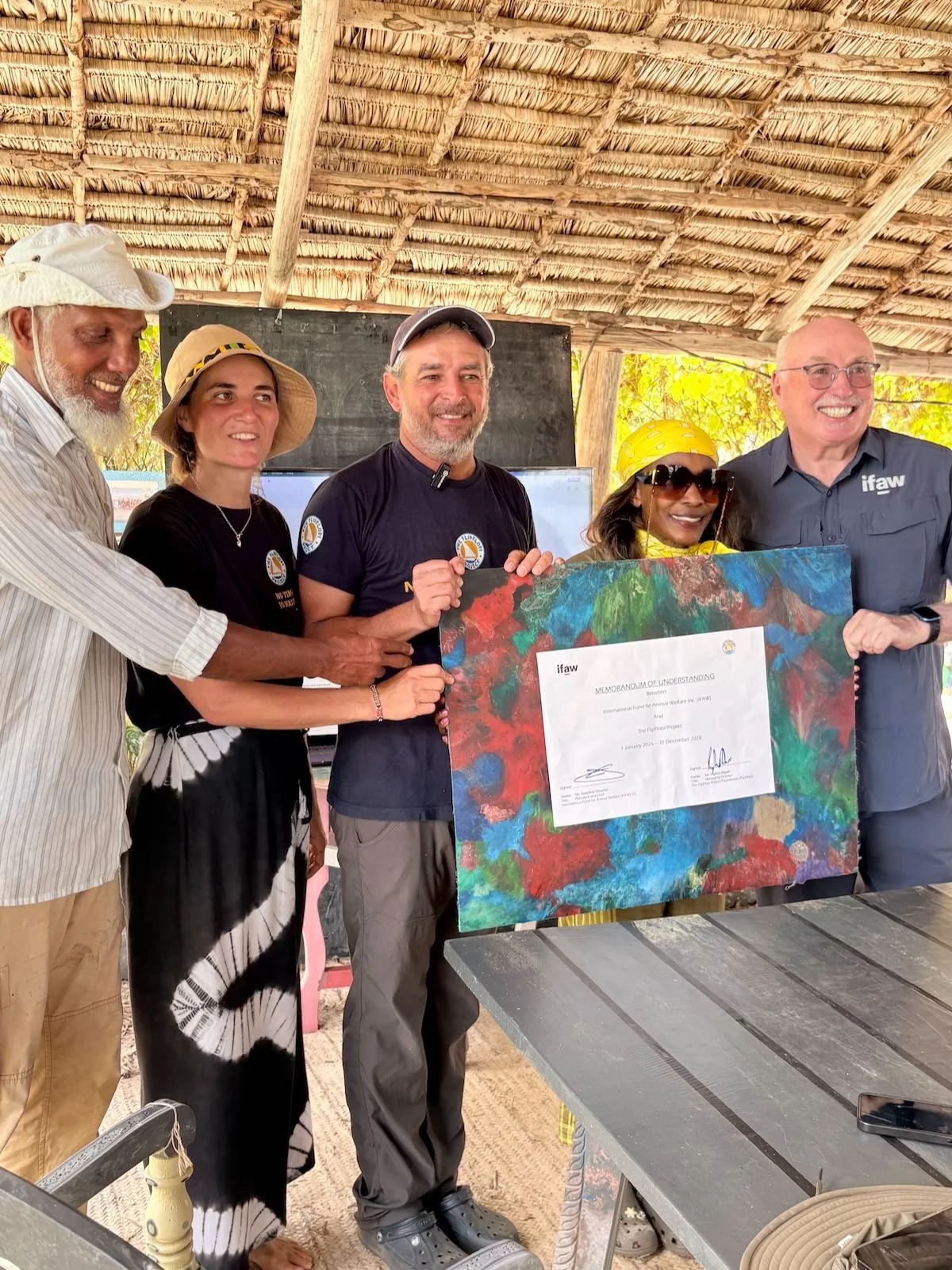
On 7 October 2026, we signed a Memorandum of Understanding with IFAW (International Fund for Animal Welfare) committing our two organisations to five years of work together towards a shared vision: a Monsoon Winds Seascape. It is an ambitious environmental protection and conservation plan linking the Western Indian Ocean with the Arabian Gulf, with Lamu as its first site.
The agreement builds on a partnership that began two years ago, when IFAW named us Innovator of the Year. Rather than ending with the award, IFAW has supported our core operations ever since. That funding pays for our eight-person recovery team, from sorters to drivers, and the running costs that keep collection and processing moving. Between February and July this year alone, it helped us recover more than 60 tonnes of plastic and backed the legal work behind the East African Community bill to eliminate unnecessary single-use plastics.
For a small organisation like ours, keeping the core running is what lets everything else happen. IFAW understood that from the start, and the signing day showed it.
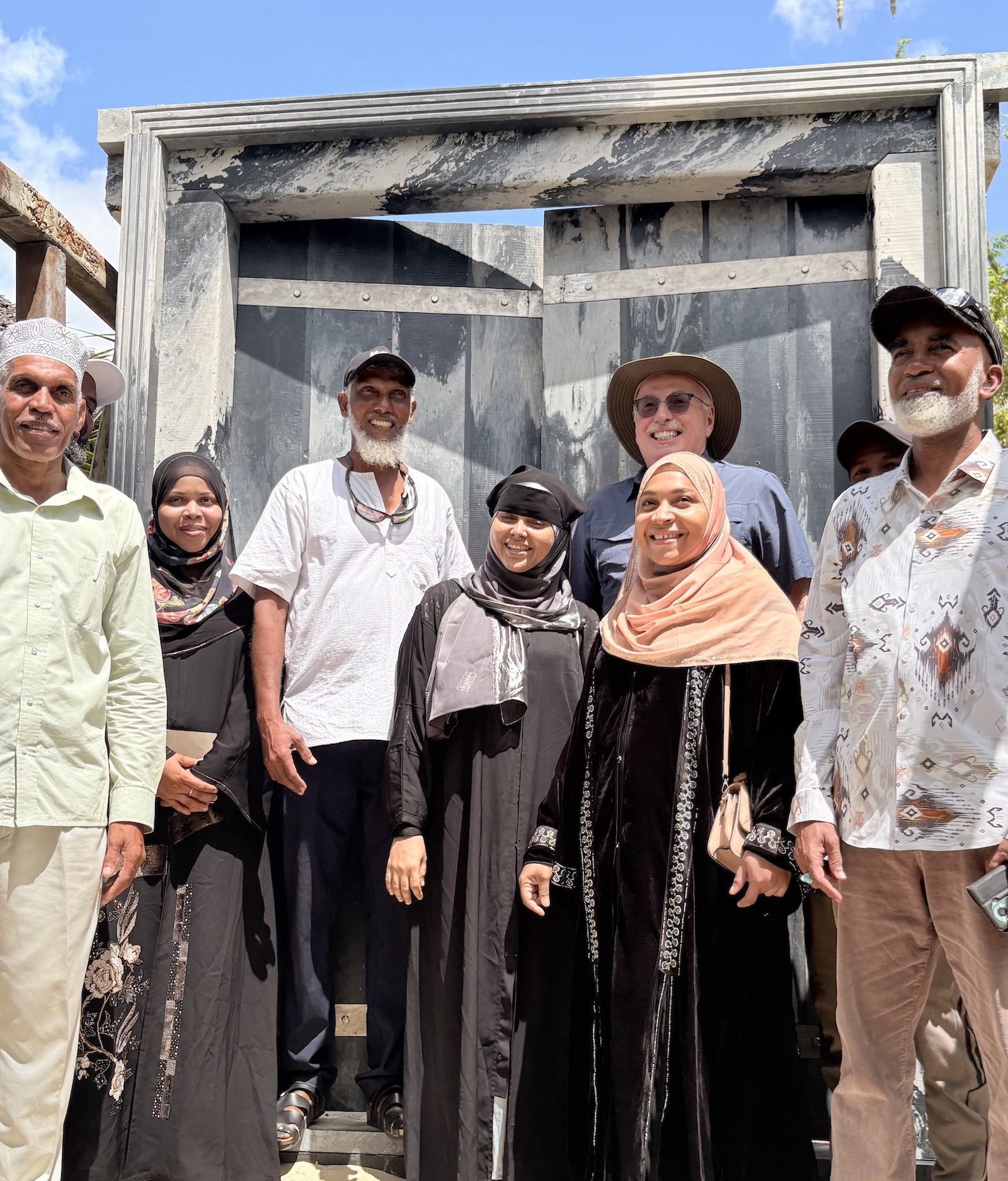
Azzedine Dowes IFAW President, PRATI members, NMK representatives and Ali Skanda in front of the new gate.
More than a signing
The day itself was about much more than an MOU. Alongside the signing, IFAW's President and CEO Azzedine Downes, and Flipflopi Advisory Board Member, Judi Wakhungu joined members of the Pate Resources and Tourism Initiative (PRATI) and the National Museums of Kenya to unveil one of the historic Nine Gates of Pate, rebuilt from recycled plastic.
The request to restore the gate came from Pate residents who wanted to reconnect their community with its history. It was designed by a team including experts from the National Museums of Kenya, local historians and anthropologists, and our own in-house carpentry team led by Ali Skanda. Through our partnership with IFAW, it has also become a conservation story.
The gate is made from half a ton of recovered plastic, collected by communities across the archipelago, including the residents of Pate village where it will stand. The collection efforts on Pate Island are part of the OCEAN Grant; funded by DEFRA and delivered with IFAW. This project is incorporating fishing communities from across Pate island into our plastic collection network, who are paid for every kilo of plastic they bring in, through the Repurpose Verified Plastic Recovery subsidy, thus supporting their income. Alongside education on how plastic harms marine life, this project is changing how people see waste. PRATI's 30 members now collect plastic alongside work like crab farming and honey harvesting, reducing the island's dependence on fishing.
This is how the gate is tying Pate's Swahili heritage to the protection of the sea around it, led from the ground up by the community that lives there and made possible by a little from everyone. Seeing an organisation of IFAW's reach celebrate a community gate showed how committed they are to grassroots work. It is also the approach we will carry into the Monsoon Winds Seascape. No single funder can work at the scale this coast needs, but many contributions joined together can, from the communities who collect to the businesses that help pay for it.
What it is
The Monsoon Winds Seascape follows the route the monsoon has always taken. For at least two thousand years the winds have carried dhows and trade between the East African coast and the Gulf. The same route is a migratory corridor for whales and whale sharks, and it is the route that plastic travels before it washes up on Lamu's beaches.
Our shared vision is a long-term programme and fund for the Seascape, so that wildlife and the people of this coast can thrive together. The Seascape would be judged by the harm it prevents rather than the cleanup we would otherwise be forced to do.
Built from the ground up
We will approach the Seascape the way we have always worked, starting with what is happening on the ground, looking honestly at what is working and what isn't, and finding ways to make it better that the community can and will take part in. We know that a plan of this size can only last if the people living along this coast play a large part in shaping and responding to it.
This is why we're immensely proud to be part of this with IFAW. They see the value in building up small organisations like ours rather than working around them.
Why it is needed now
The pressures on this coast are growing faster than the protection around it. Plastic is the most common and fastest-growing pollutant in the world's ocean, and across the Western Indian Ocean plastics and synthetics are recorded as the dominant litter item. More than 65 million people living along Western Indian Ocean coasts depend on marine goods and services. The same ecosystems are losing mangrove and seagrass to pollution and overfishing, while the sea around them warms.
At the same time, the frameworks that make large-scale ocean action possible are lining up which we hope we can benefit from.