Desks Before Lessons: What It Takes to Teach About Waste in Lamu’s Schools
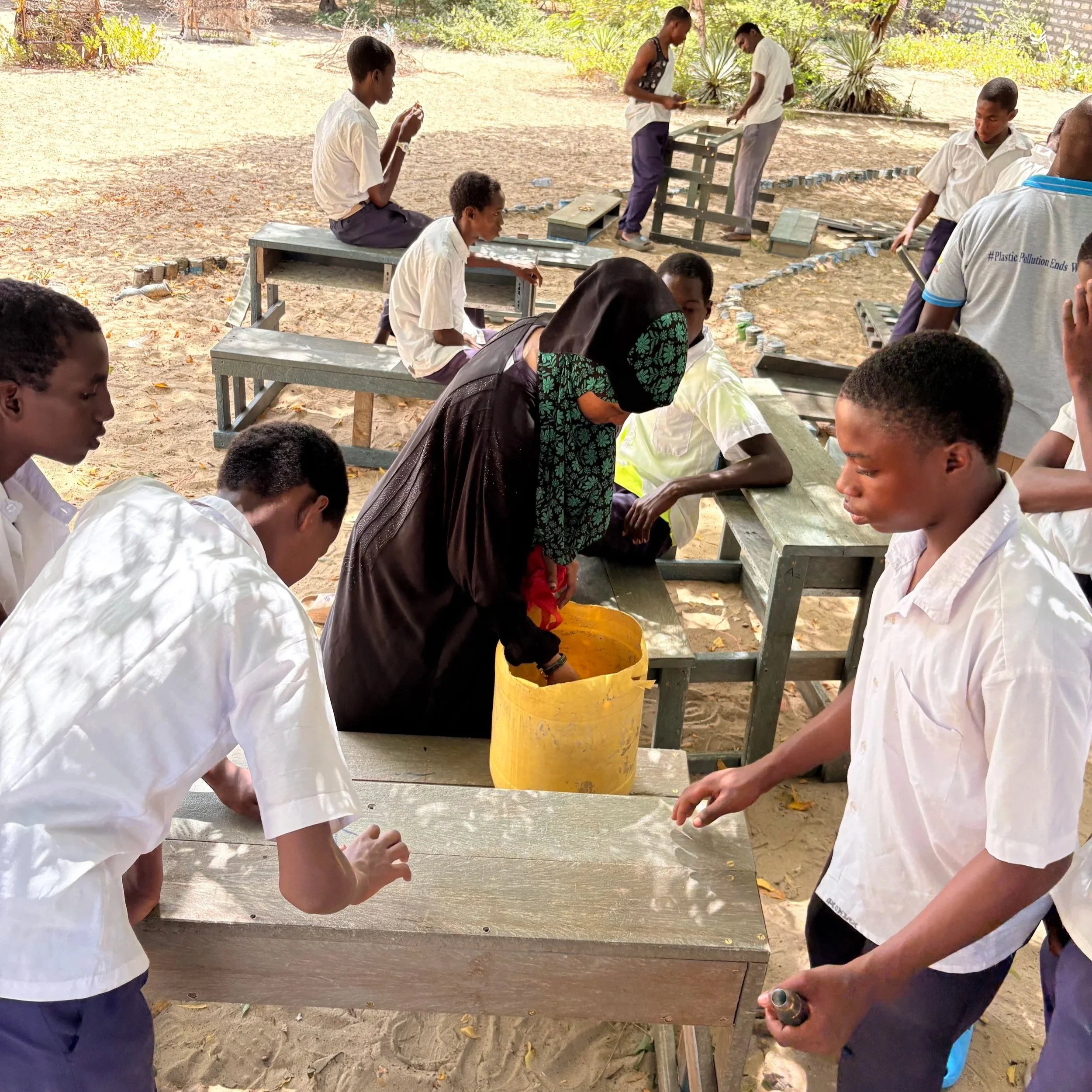
"Like gold to us." That is how the patron of the Wildlife and Environmental Conservation Club at Wiyoni Primary School described the recycled plastic desks we delivered last year. Many of the students had been used to sitting on the floor. When the desks arrived, the children helped our team assemble them, and the handover became a lesson in its own right about where the plastic had come from and who had collected it, and how it had become something they would use every day.
We started making desks because of what we saw in classrooms across Lamu and Pate islands: three or four children sharing one broken desk, others sitting on the floor. It is hard to focus on a lesson about plastic, or anything else, when you have nowhere to sit and write.
That experience, among many others, has shaped how we approach school-based education. Teachers know that their students’ potential is often compromised before they reach the classroom, let alone once they are in it. Our role is to work alongside them, co-creating approaches and resources that lift some of the unnecessary burden they carry and help build a better foundation for the next generation.
The desks are made from plastic recovered from these same islands. A child sitting at one has somewhere to write, and the lesson about why plastic is not waste is no longer abstract.
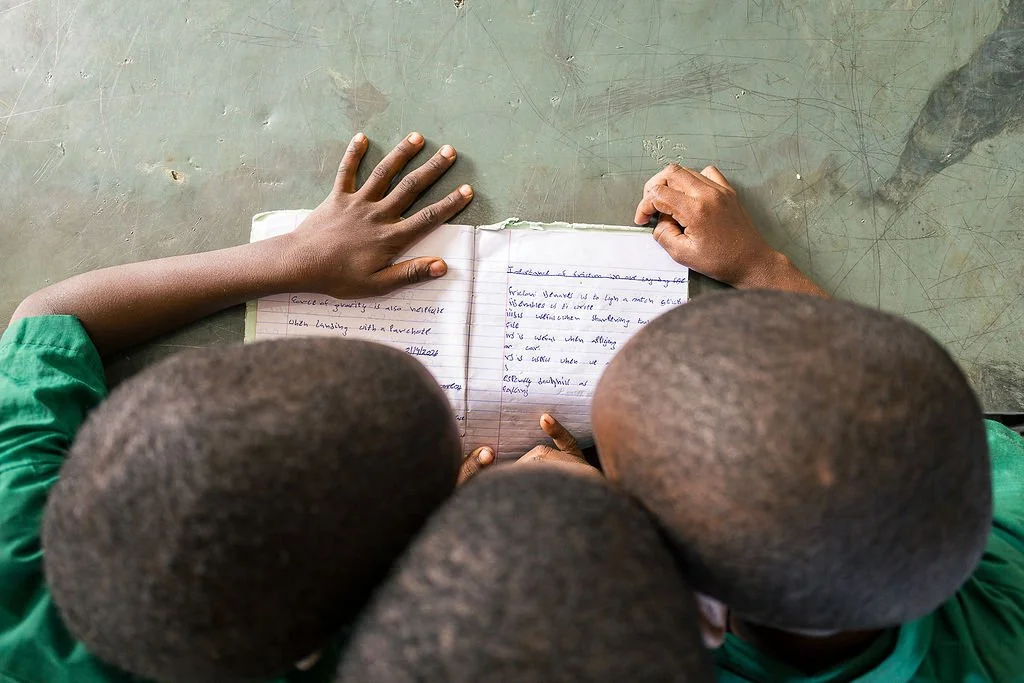
Photo Credits: Anthony Ochieng/IFAW
why we work through teachers
What children learn in class can travel home with them. But if fundamental socio-economic conditions are not in place in the school, the potential for diffusion is compromised from the onset. A primary teacher's basic salary starts at about US$200 a month (KSh 26,225), below the US$268 to US$315 that the Global Living Wage Coalition estimates as a living wage in the parts of Kenya it has studied. Their classes are overcrowded and they have very little to teach with. When we visited ten schools across Lamu and Pate islands in 2025, most had three or four children sharing a desk, one had more than 60 pupils in a single class, and half did not have enough chairs in the staffroom for their own teachers.
Waste education is not something the curriculum makes room for either. When we mapped Kenya's Competency-Based Curriculum (CBC), we found waste management covered most fully in Grade 4 and not at all from Grades 6 to 9, so whatever we bring is extra work for someone. That is why we no longer arrive with a programme. We ask teachers what would help, say plainly what we can and cannot offer, and work out together which parts a school can carry itself and which will keep needing outside support
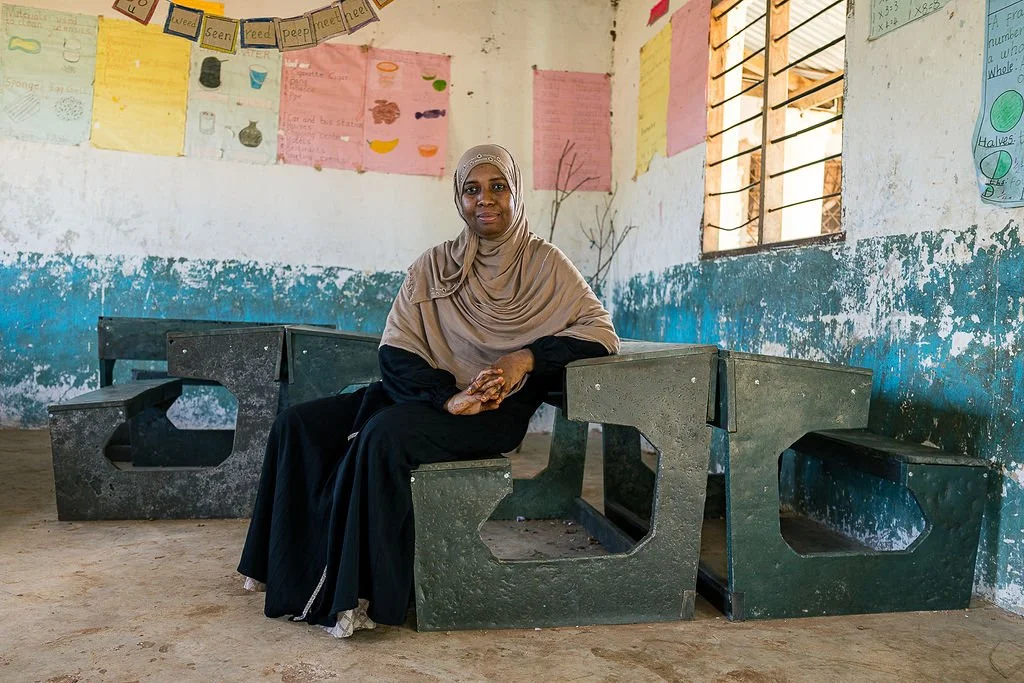
Khadija Bakari Kibwana, Head of Shanga Primary and Secondary School (Photo: Anthony Ochieng/IFAW)
What Siyu Primary taught us
Our first structured school programme ran at Siyu's primary and secondary schools on Pate Island. Thanks to our partners CMA CGM, ten teachers completed a five-day intensive at our Lamu HQ, co-creating a waste management curriculum within the CBC. From May 2025 they taught it weekly to more than 450 students.
The early signs were encouraging. Every teacher reported behaviour change in their classes, and around 70% of students switched from plastic bags to reusable plates for their break-time snacks. The strongest response came from practical lessons: handling real waste, visiting our site and making art from it.
But the gains were fragile. The plates were tied to a school feeding programme, and when it ended students stopped bringing them; plastic bags were back within weeks. By the end of the year, only two of the ten teachers were still actively engaged, and what was reported to us no longer matched what we saw in classrooms. Older students could explain why plastic is a problem, and many told us they had not changed what they do. In our team's observations and oral assessments, the youngest children, aged four to six, changed their habits most readily.
We don't see that as a failure of the teachers. In those conditions our lessons were extra work. They had no place in the official timetable, so they took the slots teachers normally use to prepare, and they were the first thing dropped when exams and sports fixtures came round.
The lesson we took is that goodwill is not a sustainability strategy. Children changed what they did when the system around them made it easy, and stopped when it didn't. What they knew about plastic mattered less than we had assumed.
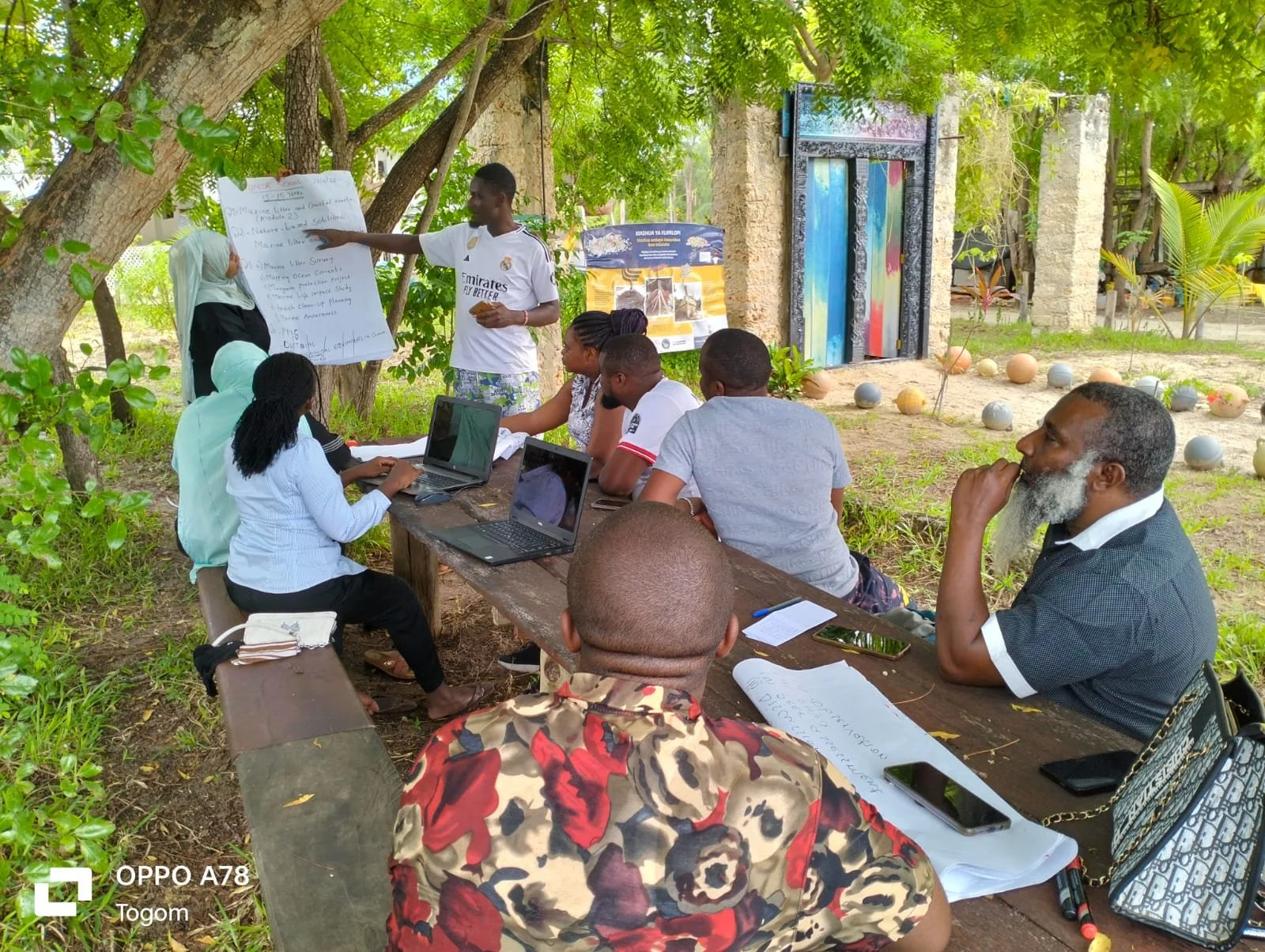
Starting with what Wiyoni Primary needs
Wiyoni Primary School is where we are putting that learning into practice. Two kilometres from the Flipflopi Centre, it is one of the largest primary schools in Lamu County, with 507 students and 21 teachers, and one of the most under-resourced. The staffroom does not have enough seats for the teachers, and books and teaching materials are stored on the floor. All of the school's waste goes into a single pit. That is the norm on these islands: in our 2022 baseline survey, 45% of residents said they dump their plastic waste, 39% burn it and 17% bury it.
Wiyoni Primary is not unusual. The Kenya National Bureau of Statistics records around 37,500 primary school students across 139 schools in Lamu County, and enrolment has grown far faster than investment. At Siyu, when junior secondary classes were added to the primary school, their desks were taken from the lower grades, leaving five or six young children at desks built for two or three. The county's own development plan names adequate furniture for learners and teachers as a priority, but budgets remain stretched. As almost everything a school needs has to come by boat, adding transport costs before a single desk is built or textbook delivered, the same budget for a mainland school buys less here in Lamu.
So before we decided on lesson plans at Wiyoni Primary, we talked about what the school was missing. To address this we're making cupboards so teaching materials no longer live on the floor, and bins so the plastic students learn to separate in class can be collected and recycled. A lesson on sorting waste means little if everything still ends up in the same pit. We're also continuing to supply desks made from locally recovered plastic, so more children have somewhere to sit and write. Sixty desks have now been made for Wiyoni, enough for 120 children.
Everything is made in our Lamu workshop from plastic recovered by our community collectors, around 33 kg of it in each desk. Every piece also comes with our commitment to repair it and, at the end of its life, reprocess it at no cost to the school.
building on what we have learned
With support from the Embassy of Portugal, we're working with Wiyoni Primary's teachers on what environmental education should look like in their classrooms. It begins with training workshops, followed by fortnightly in-classroom mentoring from a dedicated Flipflopi Education Champion, whose role is to support teachers rather than supervise them. This time the lessons have scheduled slots for Grades 5, 7 and 8.
Together, we've developed resource packs of CBC-aligned lesson plans in English and Kiswahili. This term's plan, drawn up with the teachers, had Grades 7 and 8 starting with an audit of their own school's waste. Students recorded what their households threw away for a week and traced where the most common item comes from and where it ends up. They did a beach clean-up, though time ran out before the planned count and weigh-in, and classes came to our facility to sort plastic themselves.
The pressures we met at Siyu did not go away. A religious festival took out one day of lessons, national exams arrived with a day's notice, and some teachers came to their first session straight from supervising exams, unsure of the content. This time the missed sessions were made up. The full five weeks were delivered to Grades 5, 7 and 8 between 7 September and 7 October, with around 20 sessions logged and attendance averaging about 80%. Delivery became noticeably smoother three weeks in, once we began sending a ready-made lesson plan before each session.
The school has also proposed its own answer to the question Siyu left open: who pays for this once the project ends? It wants to join our plastic buy-back scheme, so that the plastic it collects earns income to keep the lessons going, including an allowance for the additional work teachers take on with us, such as monitoring and reporting, which is outside the job they are already paid to do. The school has since set aside a classroom to store the plastic. We don't yet know whether the sums will work, but the idea came from the school, and across our work income has moved people more reliably than environmental messages.
Students leading the way
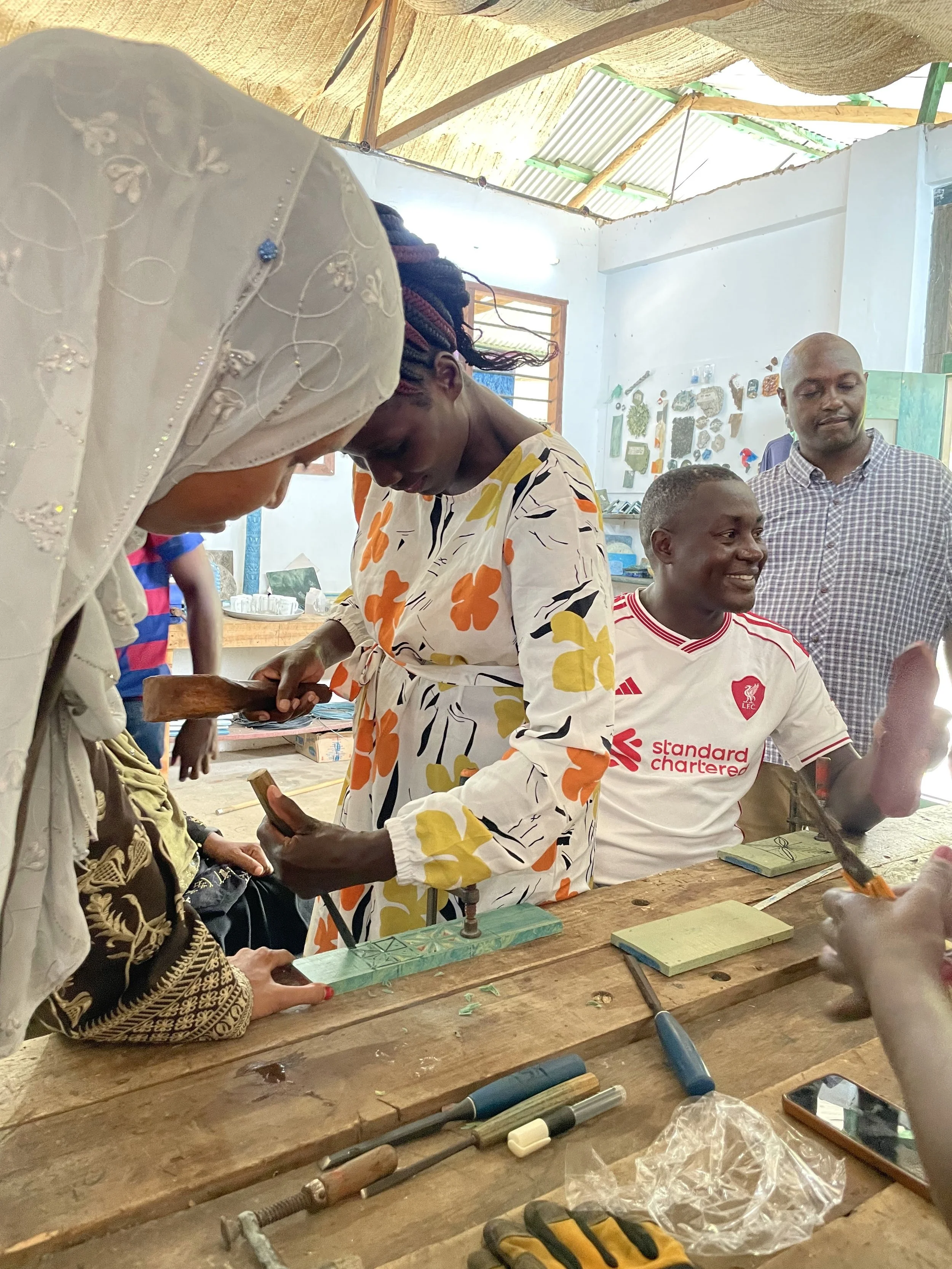
Students are partners in this too. Wiyoni Primary's Environmental Champions Club now meets weekly and will be organising inter-class waste reduction competitions. Club members came to our training centre where they learnt to recycle using our Precious Plastic machines. At Siyu, it was the secondary school's environmental club that kept going when lessons faded, taking a play about hot food sold in thin plastic bags to more than 1,500 students in other villages. Whether any of this changes habits at home is something we are measuring, not assuming.
Learning what works, and what doesn't
At Wiyoni Primary we want to know whether structured environmental education changes what students do, not only what they know. We want to know to what extent mentoring builds lasting capacity within the school, or whether sustained impact will depend on continuous external support in one form or another. And we want to know whether recycled plastic furniture can compete with timber on cost across a county's schools.
Those answers will feed into a brief for the County Education Office and our partners, setting out how this approach could reach the other 138 primary schools in Lamu County and beyond. It will include what didn't work as well as what did. It will also provide recommendations as to which parts a school can run on its own and which will always need a partner or the county.
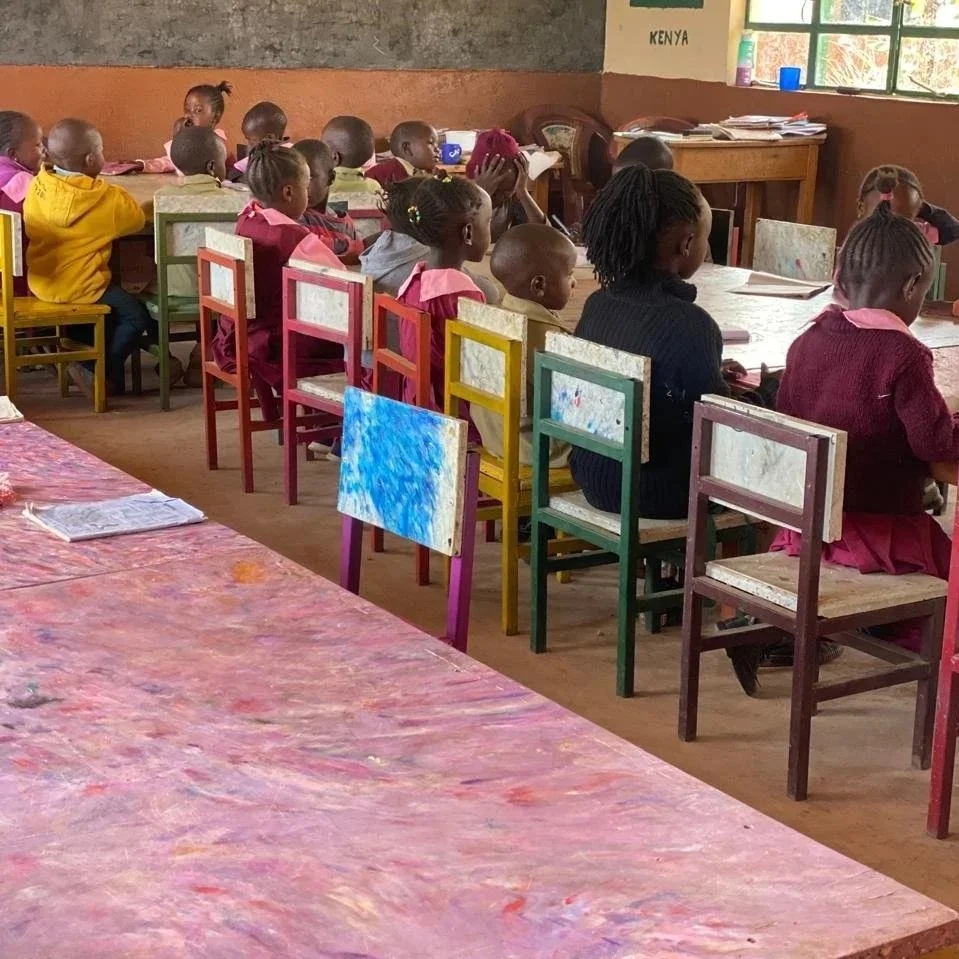
Recycled plastic sheets used as table surfaces and seating combined with metal frames
Where this goes next
We don't pretend lesson plans alone will keep plastic out of Lamu's mangroves. Much of the plastic on these islands is manufactured, sold or washed in through decisions made far from any classroom. That's why our school work is tied to our collection networks and to our advocacy for better waste policy. By 2030, we aim to have a school programme that can work in every community across the archipelago where we have a collection network. Wiyoni is where we find out what that will take.
Making school desks from recycled plastic is nothing new. From Mombasa’s young entrepreneurs Twende Green, to Sunu Plastic Odyssey in Senegal and Andao in Madagascar, movements like this have been revolutionised thanks to open source approaches led by Precious Plastic. It wasn’t long after we launched our fundraising campaign that so many of you supported (thank you!), that word travelled well beyond Lamu and before we knew it, we were supplying sheets and lumber all the way to the slopes of Mount Kenya which were assembled into furniture for kindergarten schools, and even school laboratories. Thanks to old friends like George Heriot’s School in Scotland and Far and Wild travel, over 100 children now have a chair to sit on and a table to write at.
If you'd like to be part of it, you can sponsor a recycled plastic school desk or support our education work. If you're a teacher or school in Lamu, book a school visit or call us on +254742350432.
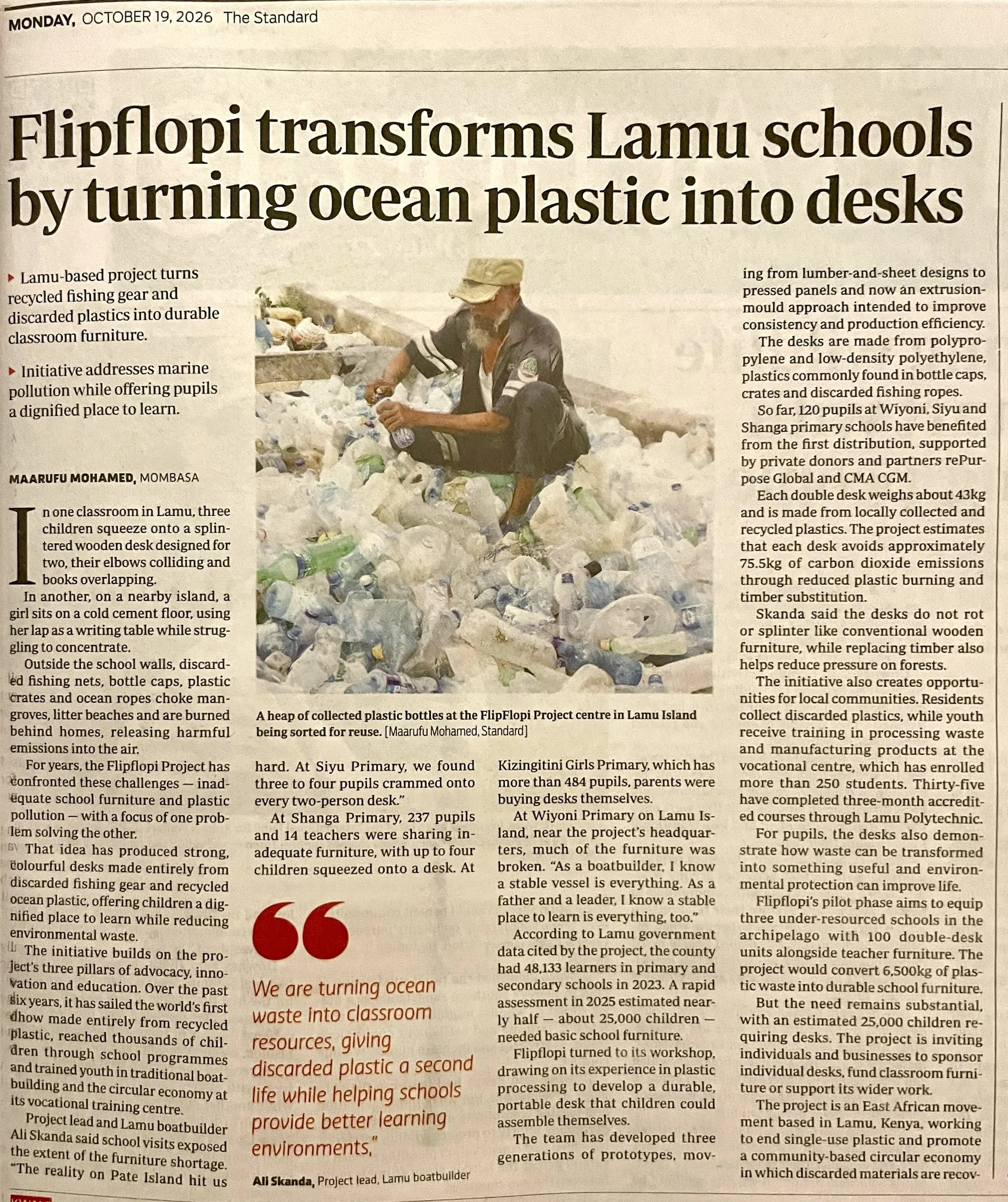
Standard Newspaper Cutting