From Discarded Fishing Gear to Recycled School Desks: How Flipflopi is Turning an Environmental Disaster into an Educational Solution
In schools across Lamu archipelago (and beyond), children are often crammed three or four to a desk made for two. Or they’re sitting on the floor. Inevitably, teachers and students struggle to maintain focus in under-equipped rooms.
Meanwhile, there’s a seemingly separate environmental crisis happening outside the school walls. Wasted plastics are building up along the coastline, in mangrove forests, and in the ocean.
We've always looked at ways where one solution can address multiple problems at once. There’s a lot of innovative solutions being led by similar community-based organisations like ours that we engage with. And like us, many of them are all about sharing ideas and open-sourcing designs and solutions. This is where we were inspired to create school desks made from recycled plastic recovered by the very same communities that collected it and whom desperately need the infrastructure.
What Inspired us to Build Recycled Plastic School Desks
Education has always been central to what we do. It's one of the three pillars of the Flipflopi Project — alongside advocacy and innovation. We believe you can't build long-term environmental change without shifting mindsets through education supported by the creation of practical infrastructure first. Over the past six years, we've reached thousands of children through school based programmes and immersive experiences through expeditions and at our Vocational Training Centre. We've trained young people in traditional boat building, furniture production, and circular solutions. And we've seen first hand how the environments where people learn, shape how they engage with the world around them.
Through our work in local schools focusing on integrating waste reduction content in lessons and creative learning made us realise there is something much more basic that we couldn’t ignore.
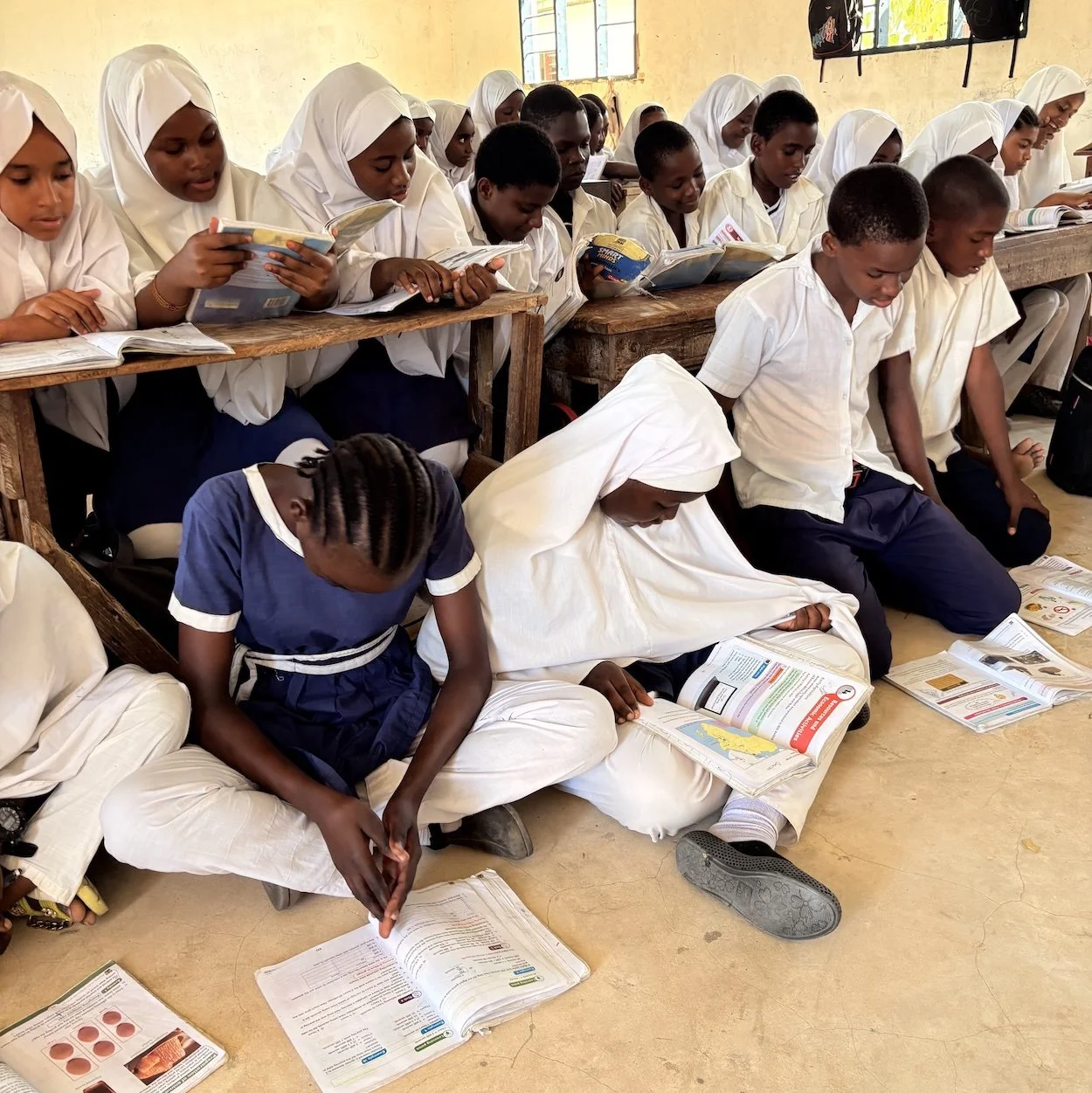
On Pate Island the situation was dire: Siyu had 3-4 students to a desk designed for 2; at Kizingitini Girls Primary with over 484 students, some parents had bought individual desks to keep their children off the floor. At Shanga Primary, up to four students were sharing a single desk meaning that 237 children and 14 teachers were making do with almost nothing. Meanwhile on Lamu Island at Wiyoni Primary School right next to Flipflopi HQ, the majority of classroom furniture was broken, posing safety risks to students.
We take so much for granted when we have more than what we need. Sitting on hard floors or crammed three to a surface causes back pain, poor posture, and physical discomfort that makes sustained concentration impossible to say the least. Without a flat surface to write on, basic tasks become a struggle, and the quality of written work will reflect it. The distraction of discomfort compounds over hours and school days, driving down engagement and participation. Surely a desk isn't a luxury, but part of the bare minimum a child needs to learn.
"Provision of adequate equipment furniture for learners and teachers” is a sector priority according to the Lamu County Government. In 2023, the “Provisional” school enrollment in Lamu County was: 37,500 students across 139 primary schools and 10,633 students across 25 secondary schools. That’s 48,133 students total. Based on our initial rapid assessment in 2025 we estimate 50% of the school population are in need of basic school furniture: that’s nearly 25,000 children.
We knew with our materials and skills we could create something that began to solve this problem. So we took to the workshop and began designing a flatpack school desk that would be durable, easily transportable, that students could assemble themselves, and that represented the full Flipflopi systems approach from collection to classroom.
The Desk Design Journey: From Prototype to Production
Getting the desk right took time and there is still room for improvement. We've worked through three generations of design — from lumber-and-sheet prototypes, to pressed-panel construction, to where we’re headed now which is developing an extrusion mould approach that should deliver better accuracy, consistency, and efficiency at scale.
The goal is a flatpack desk that’s more comfortable, durable and meets educational authority standards which can be assembled by the students themselves. What hasn't changed across any version is the material. Our desks are made from polypropylene and LDPE, the types of plastics you’ll find in bottle caps, plastic crates, and ocean ropes.
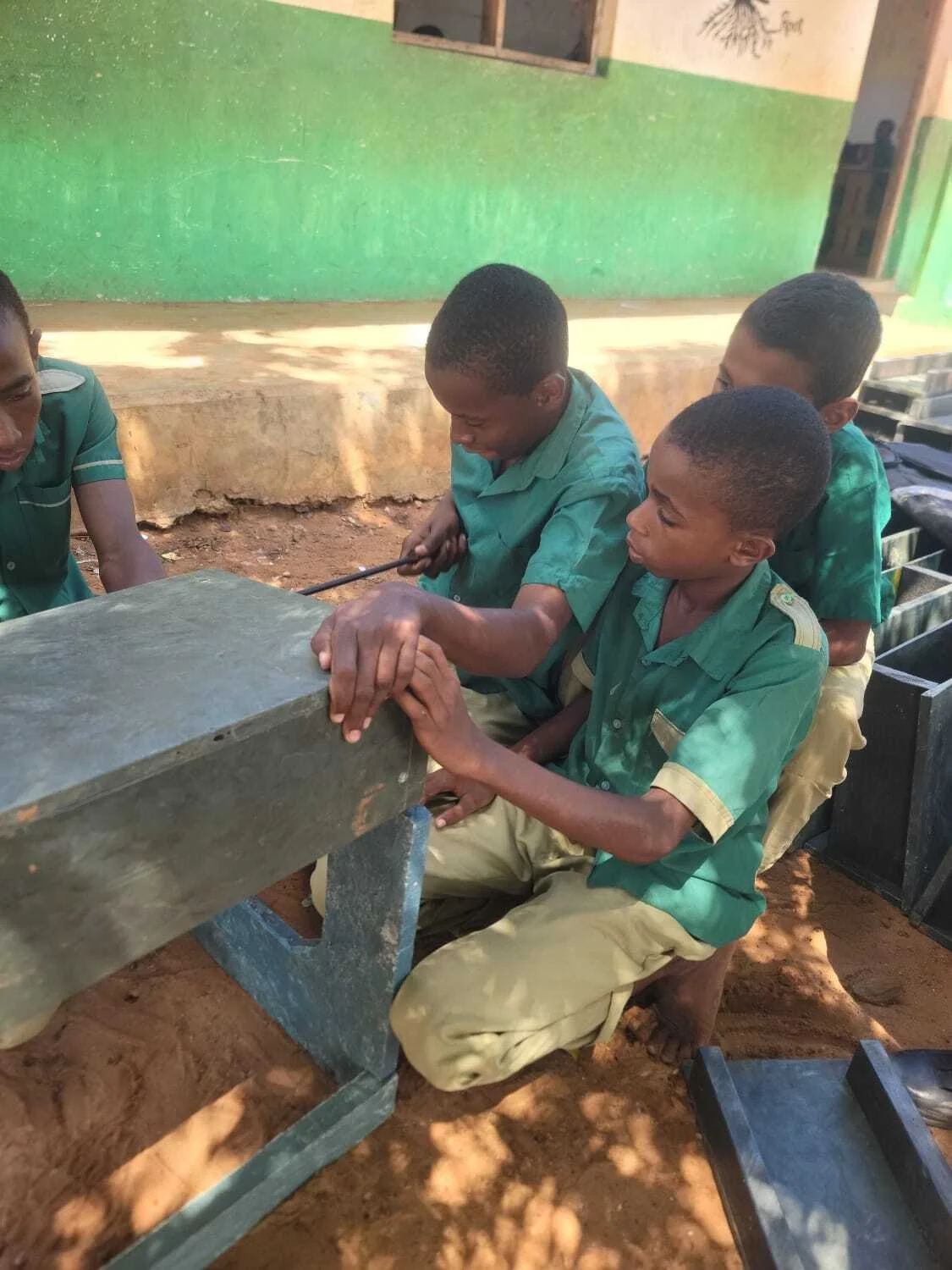
So far we have distributed desks catering for 120 students across Wiyoni Primary, Siyu Primary and Shanga Primary. All these schools are within the communities we work with and where basic furniture was critically lacking. We were able to build our first desks thanks to generous donations from private donors and in partnership with rePurpose Global and CMA CGM.
World Environment Day in Shanga: From Ropes to Desks
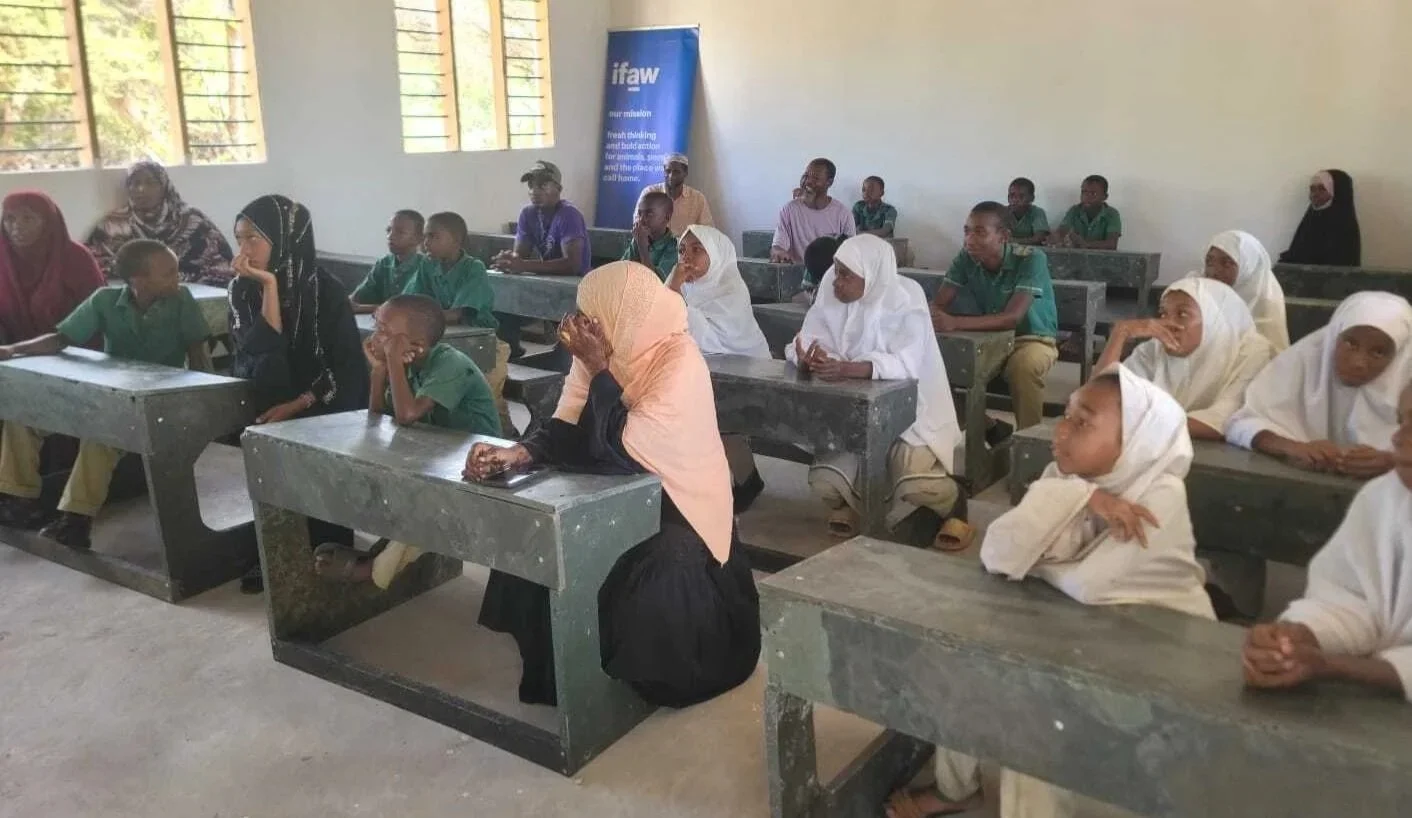
On World Environment Day, we delivered 20 desks to Shanga Shakani Primary travelling by boat to Mtangawanda, then by trike to the school. The desks were assembled over two days with students and teachers, before the whole community came together for a school clean-up.
The guest of honour, Kiarabu from Shanga Shakani, said it best: the desks the children were sitting on were made from plastic ropes collected by their own community through the OCEAN Grants Programme — and now they were sitting on them. He encouraged the students to protect their environment starting from their homes.
The event was made possible by IFAW, who sponsored the World Environment Day activities, and by the supporters who donated through our fundraising page on Every.org — whose contributions funded the desks themselves.
The Environmental Case for Recycled Plastic School Desks
Each desk we produce weighs approximately 43 kg made entirely from locally collected and recycled plastic waste. We’ve calculated that per desk, we avoid approximately 75.5 kg of CO₂ emissions across two sources of avoided emissions:
Avoided open burning: The baseline for plastic waste in Lamu is often burning, which releases an estimated 1.6–2.75 kg CO₂ per kg of plastic. Applying a conservative 60% combustion rate, each 43 kg desk prevents around 41 kg CO₂.
Avoided deforestation: By substituting timber with recycled plastic lumber, each desk spares approximately 0.14 trees per year. Over the desk's estimated 10-year lifespan, that adds up to roughly 35 kg CO₂ in avoided deforestation — carbon that remains sequestered in trees that are still standing.
The energy used in our manufacturing process is minimal: as Kenya generates 85-90% of its energy from renewable resources. This means less than 0.6 kg CO₂ is created per desk in processing emissions.
Therefore, by furnishing one classroom with 30 desks, we prevent over 2 tons of CO₂ from entering the atmosphere while also giving 60 children a safe, dignified place to learn for the foreseeable future because these desks are built to last. They don't rot or splinter, and they don't come from a tree.
Part of Something Larger: Circular Economy Education in Lamu
These desks sit at the intersection of everything Flipflopi does. We are demonstrating how plastic collected by communities can directly benefit those communities beyond payment per kg or a cleaner environment.
For students at Shanga Primary, the desk they sit at isn't just furniture. It's a demonstration and becomes a real life lesson in the impact of circular economy practice. And it serves to reinforce that there are direct benefits to keeping our environment free from litter.
This is why we've always believed that education and environmental action are inseparable. You can run clean-up campaigns. You can pass legislation. But when a child understands that plastic doesn't have to be waste, it can help shape how they interact with their environment for the rest of their lives.
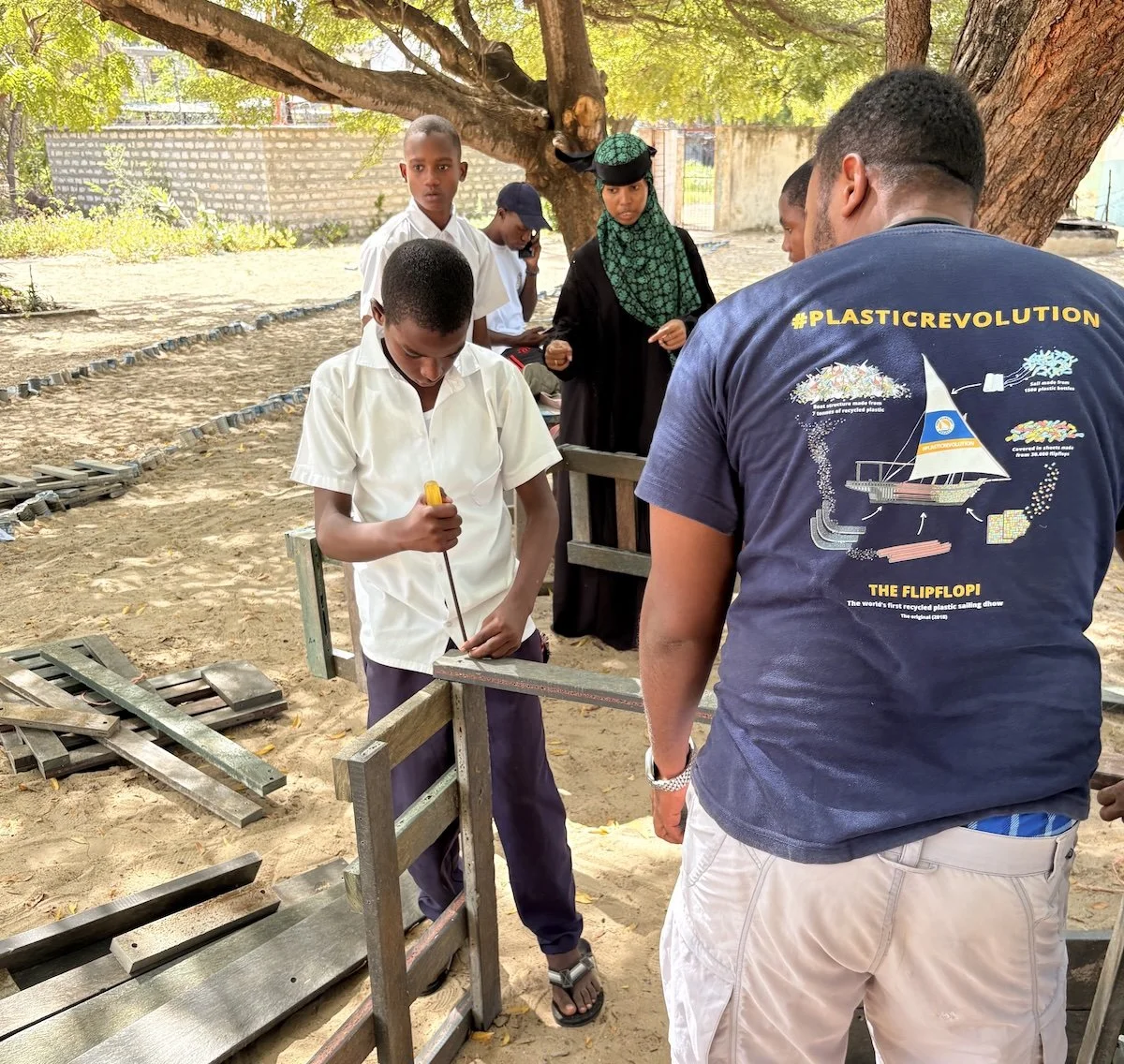
Our vocational training centre has now enrolled over 250 students, with 35 completing three-month accredited courses through the Lamu Polytechnic. Many of those same skills — plastic processing, furniture production, circular economy principles — are embedded in the desk manufacturing process. Each desk is also a training outcome.
This pilot phase of our school furniture initiative aims to equip three of the most under-resourced schools in the archipelago with 100 double-desk units, seating 200 students, alongside teacher furniture. That represents 6,500 kg of plastic waste converted into long-lasting, dignified school furniture.
How You Can Help
We're still in the early stages of this programme, and the need in Lamu's schools far outpaces what we've produced so far. Every desk matters both to the child who sits at it and to the plastic that doesn't end up burning next to someone’s house.
You can sponsor a single desk, help fund a full classroom of 30, or partner with us as a business looking to meet tangible ESG and climate commitments. Corporate partners receive recognition on desks, in reports, and across Flipflopi communications — and the impact is fully traceable through our Verified Plastic Recovery Program.
If you're a business interested in a partnership, get in touch at hannah@theflipflopi.com. We'd love to show you how supporting recycled plastic desks in Kenya can be part of a meaningful, measurable sustainability story.