Marine Litter: An Emerging Threat to Mangrove Health and Establishment
By Melchim Mwaniki Roothaert
Although mangroves can handle being submerged in salt water just fine, they now face a growing risk of suffocation, buried under the marine litter that increasingly fills our mangroves with plastic, textile waste, and debris carried in on every tide.
Lamu is known for its warm and open communities. It is home to some of the best preserved examples of Swahili architecture where Swahili traditions and culture still thrive. But it is also home to one of the world’s most vital ecosystems; mangrove forests.
Lamu holds 68% of Kenya's mangrove forests; the ecosystem binds land and sea together. Mangroves provide vital protection for coastal communities against storm surges and coastal erosion, while also being one of the greatest natural carbon sinks on the planet. It is no surprise then that mangrove conservation in Kenya has become a cause that communities, researchers, and policymakers are increasingly rallying behind as these forests are the foundation of life on the Kenyan coast. However, this beauty is increasingly overshadowed by marine litter, which washes ashore, accumulates on beaches, and becomes trapped within the mangrove roots and branches.
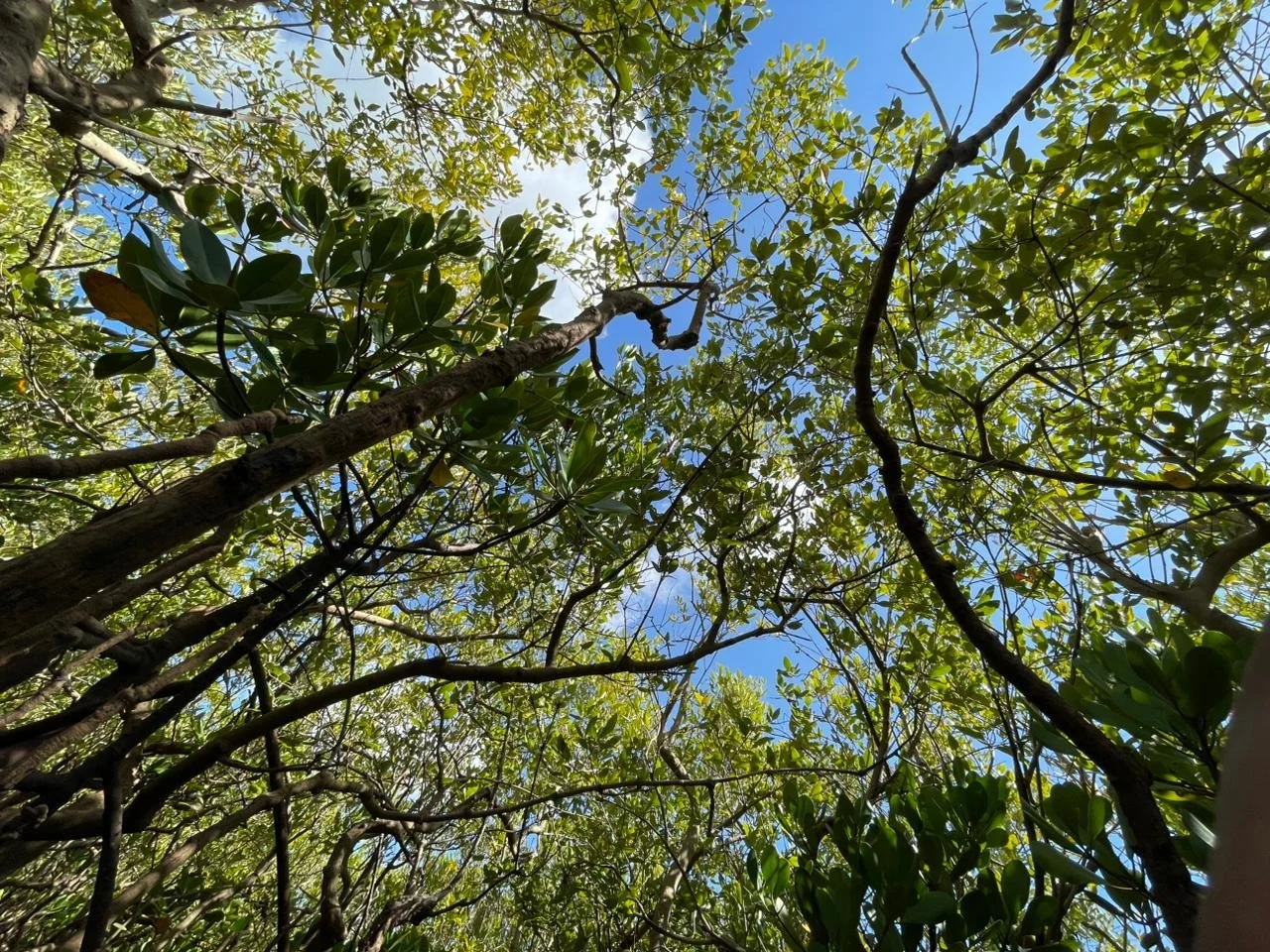
A view through the mangrove canopy.
I came to research the effects of plastic pollution in Lamu, specifically the impact of marine litter on mangrove ecosystems for my master's thesis. As a Kenyan, it felt important to contribute to research that hits close to home. At the same time, I had never been to Lamu before, and this added a sense of novelty and adventure to my research. There was something about stepping into a community so immersed in culture, yet facing the modern environmental problem of anthropogenic marine debris, that made the work feel worthwhile.
I was connected with Flipflopi’s CMA CGM Pate Island project which had a mangrove restoration component and partially supported my fieldwork. Together we set out to understand exactly how marine litter, such as plastic, impacts mangroves.
A Gap in the Global Research
A thorough examination of 40+ studies on this topic showed me how the health of the forests may be affected by waste plastics. The smaller plants face the risk of being buried or uprooted, while seedlings have trouble finding space to establish themselves through clusters of marine debris (De et al. 2023, Kesavan et al, 2021). Additionally, the aerial roots of the mature trees can be suffocated by layers of plastic (van Bijsterveldt et al., 2021), and the barks can be damaged by floating debris being crashed onto them by the waves (De et al. 2023), while the habitats of creatures such as crabs may also be obstructed (Luo et al., 2021; Kwan et al, 2016; Bulow & Ferdinand, 2013).
From the limited research that was out there, it was clear that marine litter has the potential to impact the mangrove ecosystem negatively. Something that many mangrove restoration projects in East Africa don’t always account for.
During my search, I found no existing studies focused on the Lamu Archipelago or anywhere in Africa. The research that did exist was conducted on mangrove species from other parts of the world, making it of limited relevance to Lamu. Even the basic biology of how local mangrove species establish themselves is poorly documented, including something as fundamental as how a floating seedling eventually anchors itself upright in the sediment.
This only made me more determined to discover the hidden truths about the mangroves of Lamu that lay buried between the plastic bottles and flipflops.
Into the Field: Pate and Faza
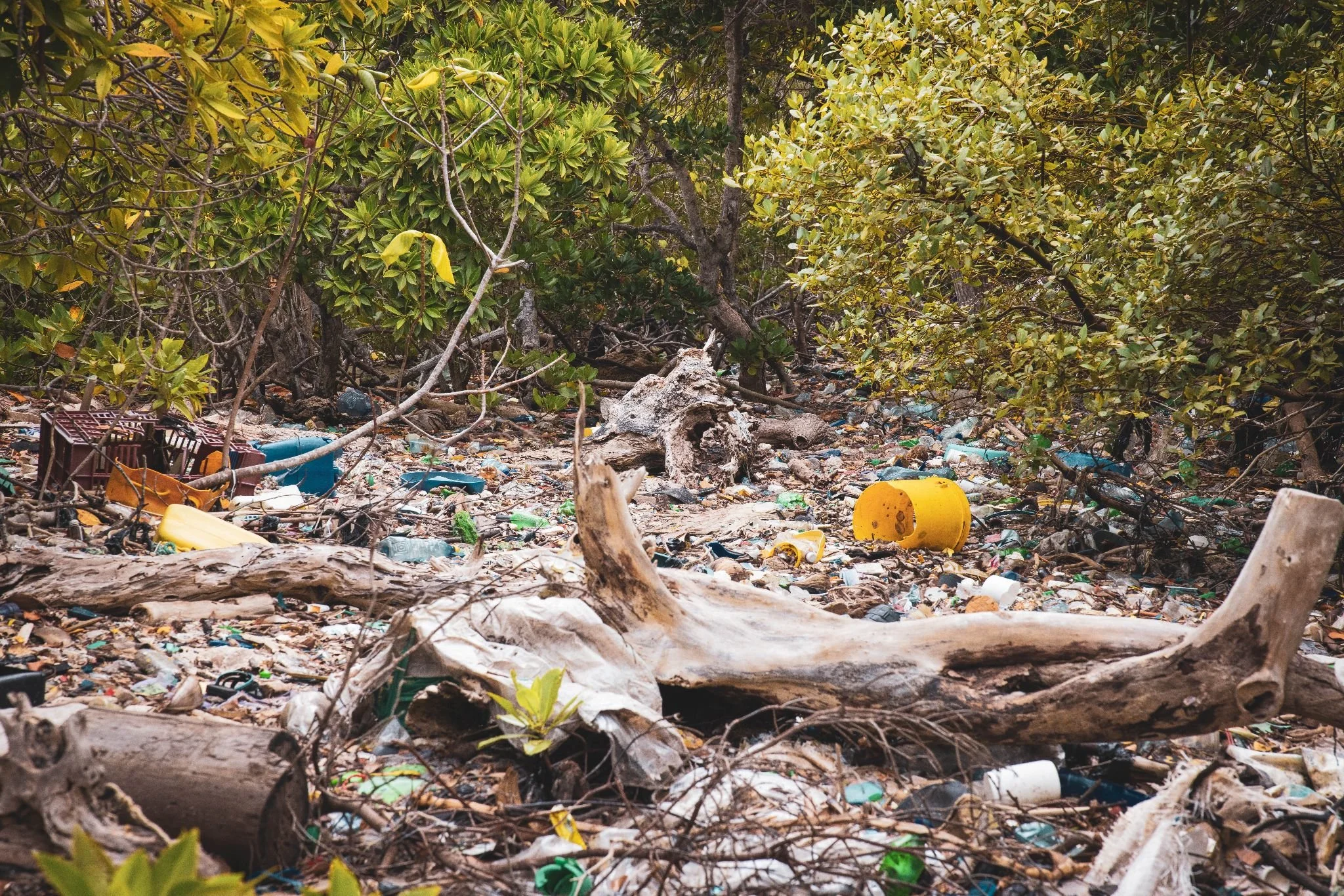
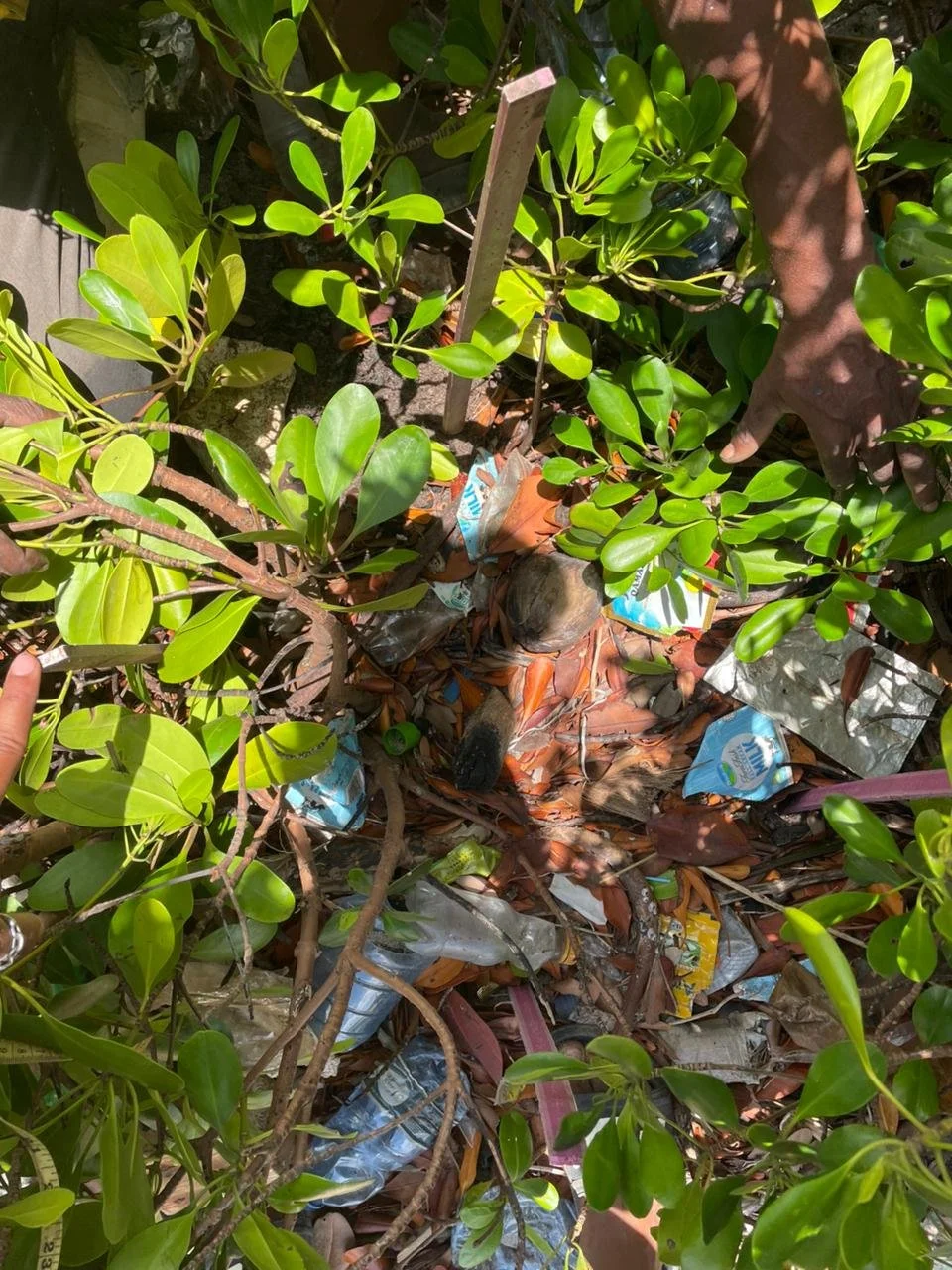
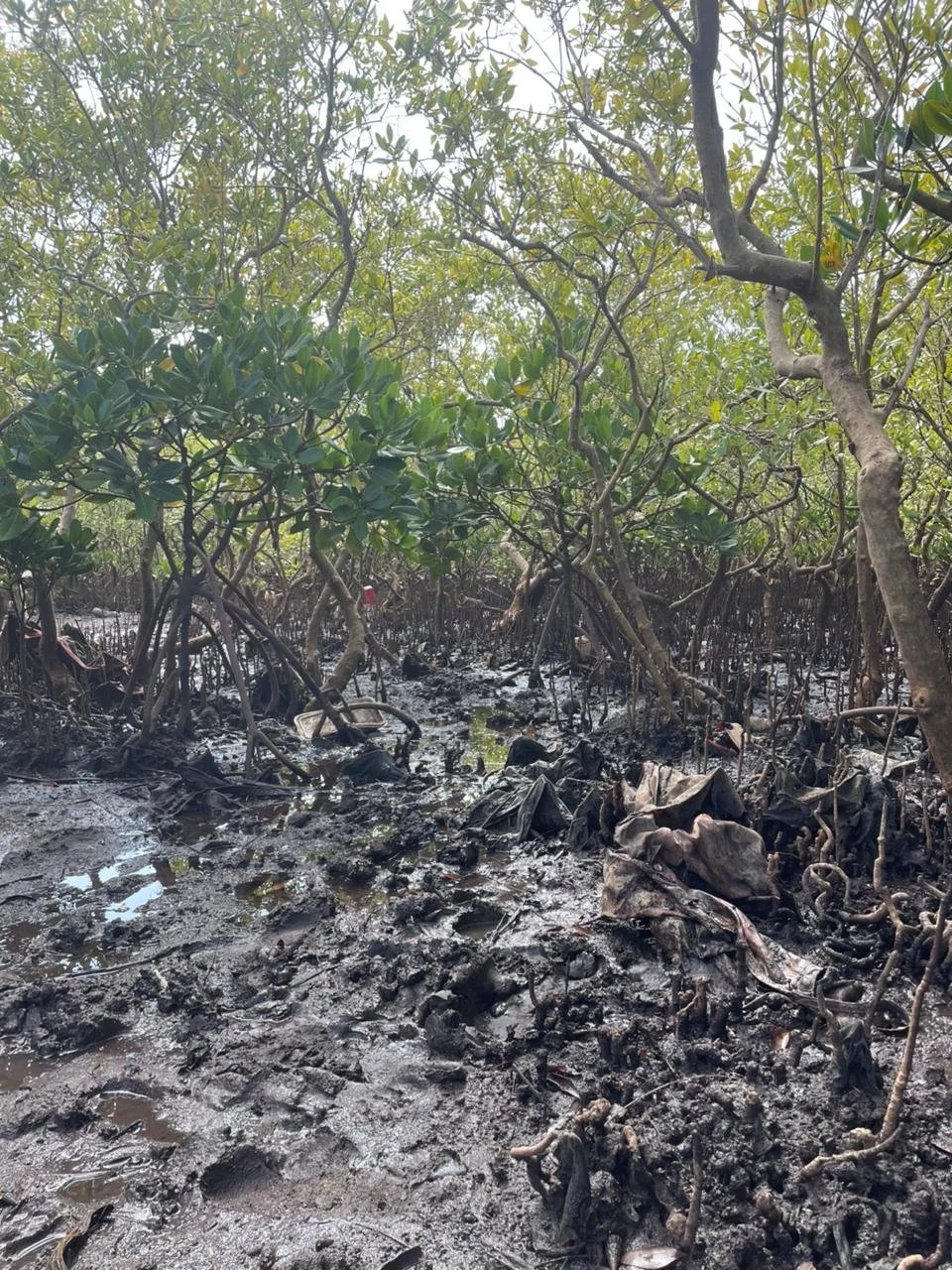
An area of mangrove forest within the Lamu Archipelago that is covered in marine plastics and pollution
For the field research, I selected the mangrove forests adjacent to Pate and Faza towns. These sites experience large amounts of marine litter being actively dumped into them so were the perfect places to investigate. The next step was to quantify the amounts of marine litter and measure various mangrove forest health parameters to allow me to gain insights into the relationship that marine litter has with the ecosystem as a whole.
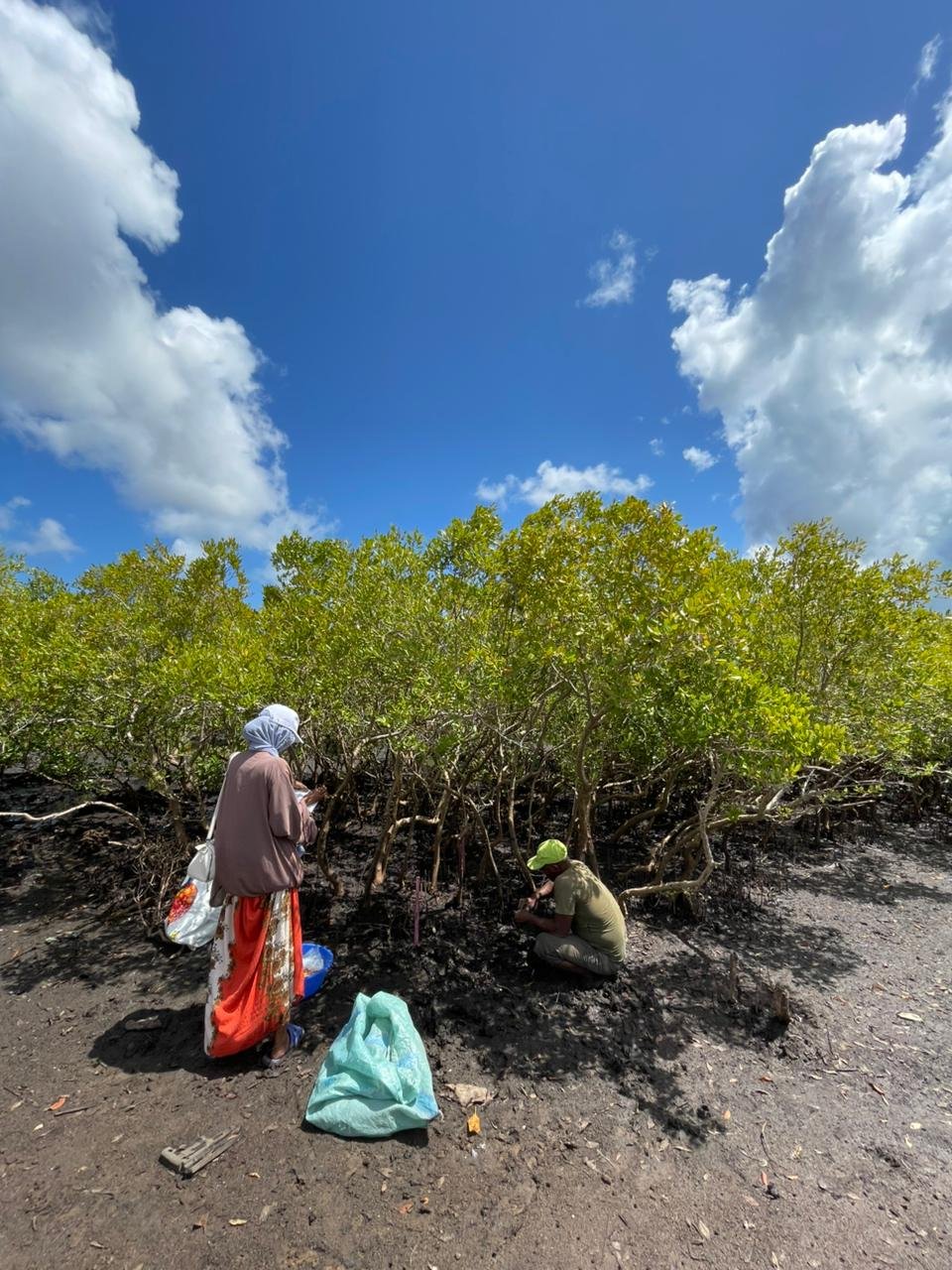
I was joined by Ahmed and Fatima, two residents of Pate Island — part of Flipflopi’s community recycling team there — whose knowledge of the area and support were invaluable.
What We Found in the Mangroves
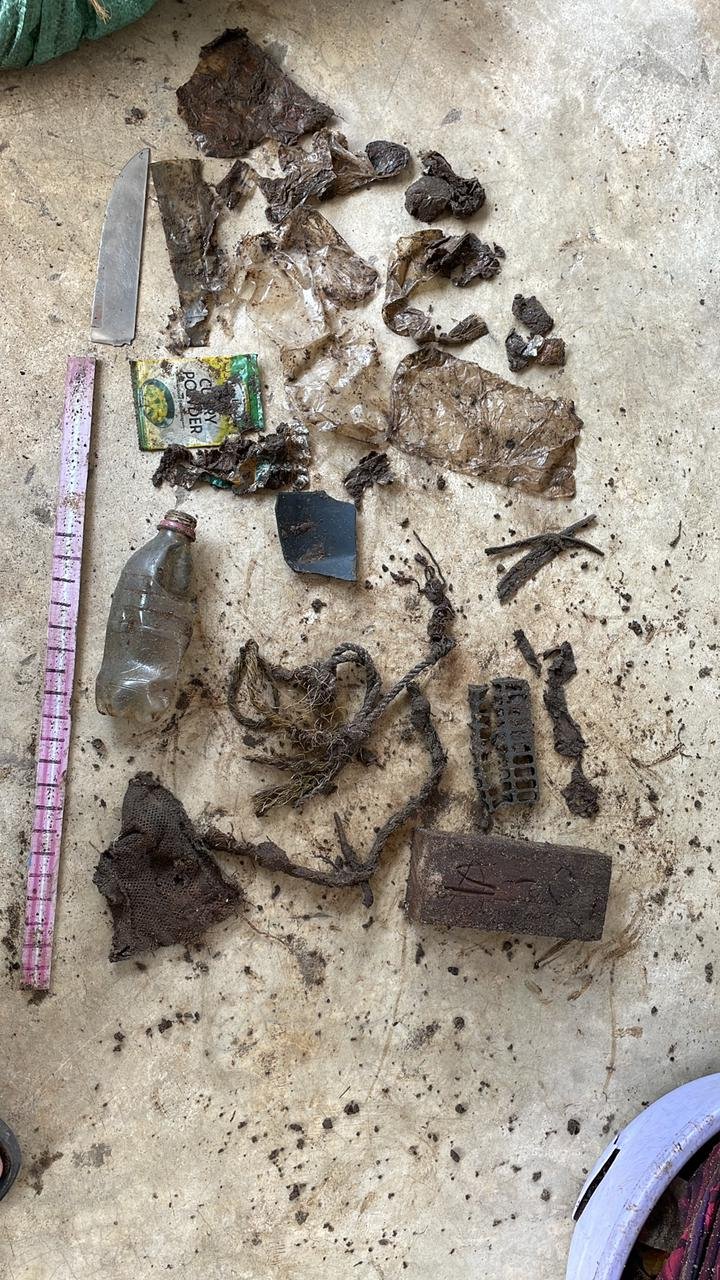
In the field, the range of marine litter we encountered was unsettling. Plastic bags had wrapped themselves around roots and branches, fishing lines were tangled and tugging at vulnerable growth, and textile fragments had settled into the sediment beneath the trees, often together with woven polypropylene bags that had come to dominate patches of the forest floor. We even came across a needle still attached to an IV drip tube and bag, tied around a branch. It was a lot to take in. And all this after two years of community clean-ups supported by the CMA CGM project around Siyu village, which had already removed over 70,000 kg of marine debris together with the community.
The scale of what remained was a sobering reminder of just how relentless the tide of waste really is.
But moving further from the populated towns, the forests occasionally revealed something else entirely. Some mangroves held no marine litter and were almost untouched — a reminder of the beauty that these ecosystems hold.
One of the main insights revealed by the field study was that the mangrove seedlings and marine debris are transported by the same currents, to the same places. This suggests that the chances of marine litter and seedlings interacting frequently are high.
Putting It to the Test: The Seedling Experiment
To dive deeper into the interactions between mangrove seedlings and marine debris, I conducted an experiment. I hypothesised that layers of plastic and textiles in the sediment would reduce the ability for mangrove seedlings to anchor themselves in the ground as they act as a barrier to ideal root growth.
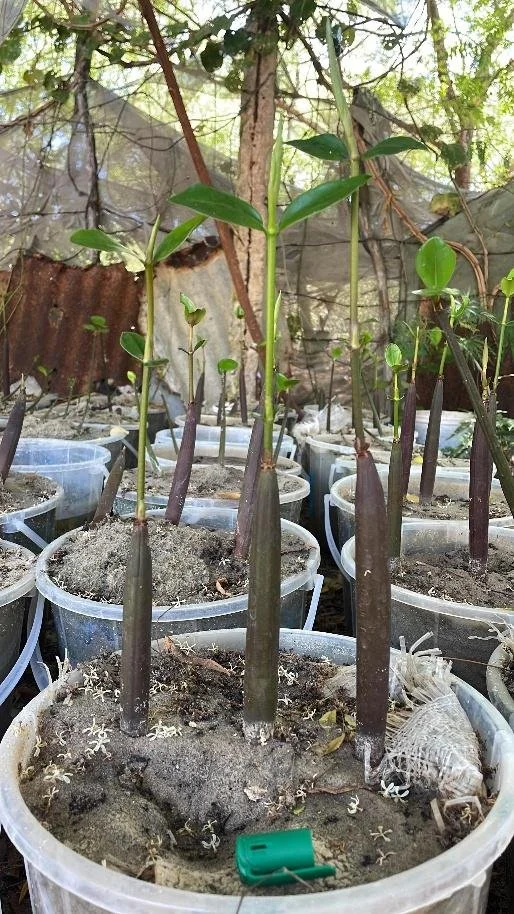
Experiment: a pot with mangrove (Bruguiera gymnorhiza) seedlings/propagules planted with a layer of plastic (gunia) in the sediment below them
To investigate this, I set up a pot experiment using two planting orientations. The first was vertical, mimicking how a propagule naturally torpedoes itself into the sediment after detaching from the parent tree. The second was horizontal, representing propagules that don't manage to self-embed and instead wash up and strand themselves on their side. In both cases, I placed a layer of either plastic or textile in the sediment beneath or below the propagule, to see whether these materials reduced the seedling's ability to anchor itself. Anchorage was measured by attaching a small peg to the top of each seedling and connecting it via a string to a spring balance. I then pulled upward until the roots gave way, recording the force required to dislodge it from the sediment.
What I found was that both materials reduced seedling anchorage, which led me to believe that textile and plastic waste has the potential to disrupt the establishment of seedlings in areas where there is frequent interaction.
Another part of the experiment included using degraded marine debris to simulate plastics and textiles which have been damaged by environmental factors such as wave abrasion and sunlight.
Interestingly, when we looked at the effects of degraded debris, we found that the pots with degraded plastic layers actually increased seedling anchorage. This increased anchorage is due to the fact that the roots are able to tangle more with the degraded plastic. However, more research needs to be conducted to investigate the long-term effects of the entanglement. This further highlights the complexity of the interaction between mangrove seedlings and marine debris.
Why This Matters
Understanding the factors that limit the ability of mangroves to establish themselves is crucial to further mangrove conservation efforts in Kenya. These constraints limit their capacity to recolonise degraded areas, maintain healthy populations, and expand into new habitats. The countless species that rely on these ecosystems would lose their habitat. Coastal communities that depend on mangroves for fishing, farming, and protection against storm surges and erosion would be left increasingly vulnerable. And the carbon stored within these forests would be released, accelerating the very climate change that is putting these ecosystems under pressure in the first place.
Sea-level rise makes this expansion increasingly important, as it pushes mangroves towards higher elevations. However, suitable space is often scarce in these new territories, due to existing human development, and the forests are exposed to more debris from the landward side from sources such as dumpsites.
Together, these pressures may restrict the natural resilience of mangrove ecosystems at precisely the time when their ability to adapt and migrate is most needed.
An important takeaway is what this research suggests about improving mangrove forest restoration. Current efforts often focus on physically planting seedlings into the sediment, but success rates tend to be quite low. Mangroves are actually quite capable of regenerating on their own when the conditions are right. Planting into unsuitable environments doesn’t address the underlying problem, and simply adds seedlings to a space that was already struggling to support them.
What this study suggests is that seedlings and litter are being carried to the same places by the same currents, and that the litter may well be the very thing preventing those seedlings from establishing themselves. If that is the case, removing the debris could be one of the most effective things we do, allowing nature to do what it does best, and shifting mangrove restoration efforts toward working with the ecosystem rather than thinking we know better.
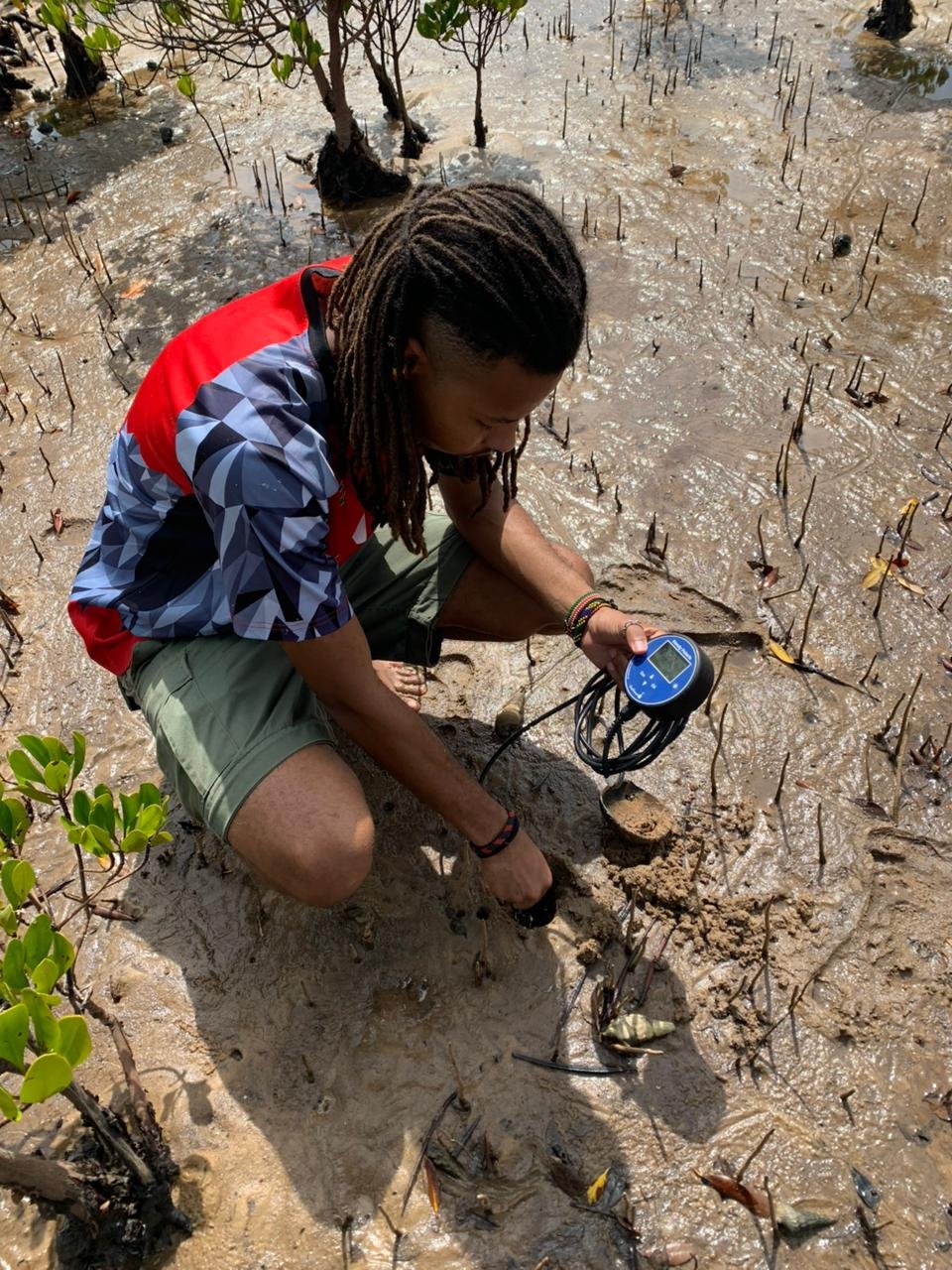
Melchim the author in the field during his research
What is next?
This research is just the beginning. No studies of this kind had been conducted in the Lamu Archipelago or anywhere in Africa, so this study begins to fill that gap. However, there is a need to expand this experiment and for further research within this area generally. But I hope my work begins to inform both the scientific community, and communities living along the Swahili coast about the real threat that marine litter poses to these ecosystems.
Sometimes the first step toward solving a problem is simply starting the conversation, and that is one of the goals I wish to accomplish with this research. Perhaps it may also inspire someone to continue exploring these questions further. Research can also feed into policy discussions around marine litter management and mangrove protection, giving advocates and decision-makers something concrete to refer to.
From Research to Action: Flipflopi on the Ground
The mangroves of Pate Island are not just an ecological treasure but also a window into the full scale of plastic pollution in Lamu. Two active projects on the island are helping us understand what ends up in these ecosystems, and building the community infrastructure needed to address and reduce plastic pollution.
Through our partnership with CMA CGM, we've been conducting door-to-door household collections and systematic marine litter surveys within mangrove systems for two years, while also planting mangrove seedlings in degraded areas as part of our wider mangrove restoration work in East Africa. Over that period, community teams have removed an average of 674 kg of waste every week, generating some of the most detailed data yet on what waste accumulates in these environments. What that data reveals is striking: textiles and plastics together account for 91% of the marine litter removed from the mangroves, and in Siyu's mangrove systems alone, over 70% of waste collected was textile waste.
It is a stark reminder that plastic pollution is only one strand of a much broader waste crisis entangling our coastal ecosystems.
Building Citizen Science from the Ground Up
Our approach has also demonstrated something less easy to quantify but just as important: the power of building citizen science capacity at the community level. By training local teams to collect GPS coordinates, measure survey areas, record litter weights, and conduct brand audits, we now have systematic and consistent data where none existed before. The marine litter monitoring continues into its 4th year through the Ocean Grant program and support from WIOMSA
Furthermore, community participation in mangrove cleanups has heightened awareness of the dangers of ocean dumping, and the economic stimulus of the programme has brought with it increased local cooperation. Anecdotal evidence is also pointing to something encouraging; crab farmers and fishers around the cleaned mangrove areas are reporting improved catches, suggesting biodiversity health may be recovering as debris is consistently removed.
This last point matters beyond Pate Island. The impact of anthropogenic marine debris on mangrove health remains globally understudied. Our work on the ground and Melchim’s research explained above is now contributing to filling that gap. It’s also directly informing how we prioritise collection, what materials we track, and how we communicate the challenge to partners and policymakers.