Ten Years to Prove a Point: Inside Flipflopi's 2025 Annual Impact Report
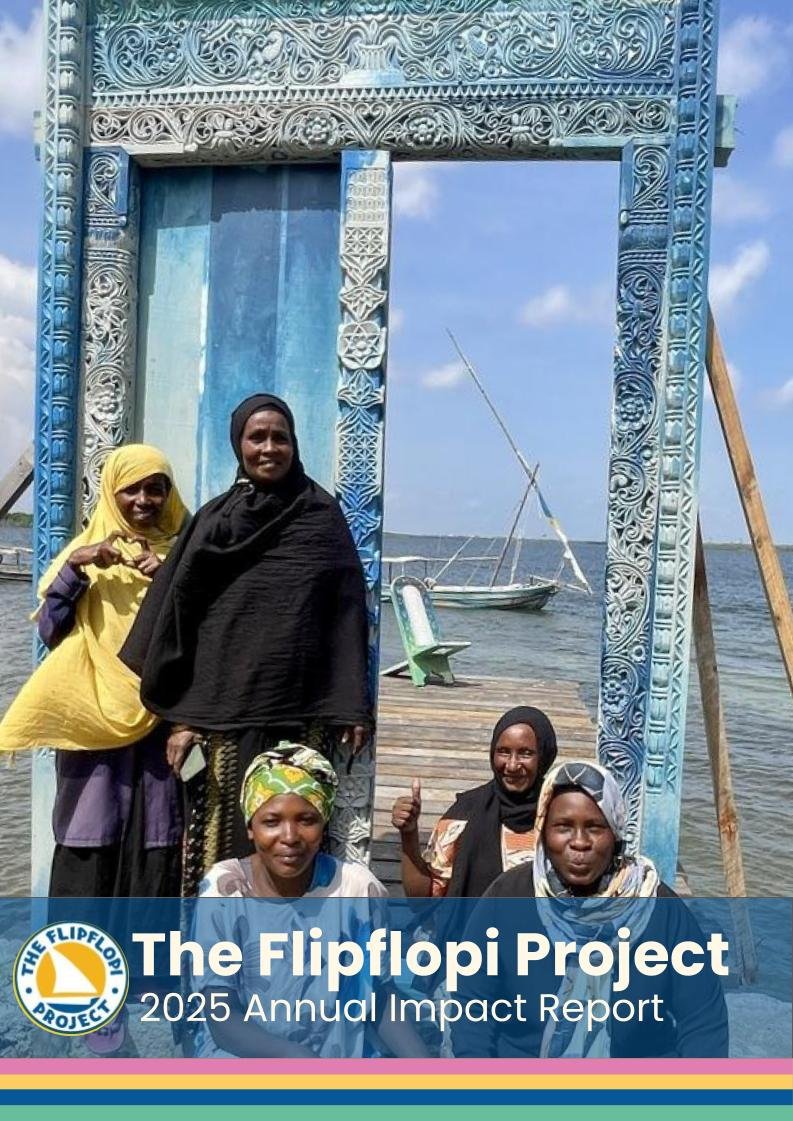
The argument at the heart of Flipflopi's 2025 Annual Impact Report is one ten years in the making: you cannot end plastic pollution without changing the system that produces it.
Ten years ago, we set out to prove that single-use plastic doesn't make sense — building the world's first fully recycled plastic sailing dhow and taking the #PlasticRevolution on expeditions across East Africa. In 2022, awareness turned into the next chapter of action: a community-owned circular economy in Lamu that recovers plastic, recycles it locally, and keeps the value with the people who make the system work.
In our years of operation, we’ve built tangible evidence to show that plastic pollution is a symptom of our economic system that externalises cost onto the communities least able to absorb it. Dominant circular economy models risk compounding this. Too often they are capital-intensive, volume-driven, and designed for scale - not for the people and places that need them most.
Solving plastic pollution can indeed be a gateway to transforming the systems that produce it but that has to be grounded in practical and tangible actions that directly benefit the people and ecosystem that are most affected by it on a daily basis. And this is what we are most proud of and keeps us going:
108.1 tonnes of plastic collected (448 tonnes in our collection lifetime)
107 people trained at our heritage training centre, a living classroom where practical skills meet environmental purpose, and where learners from Lamu and beyond engage directly with the challenge and possibility of a circular economy.
15% operational costs from enterprise revenue — This isn't profit for shareholders: it's money that stays in the system, funding fairer collector rates, new infrastructure, and allowing us to depend a little less on the next grant cycle
A toolkit reaching 2,202 users across 104 countries in its first year
Two major international recognitions: Ali Skanda named to the Explorers Club 50, and co-founder Dipesh Pabari awarded an Ashoka Fellowship
2025 also embedded that evidence into policy at every level: a seat on Lamu's Waste Management Committee at county level, a place on Kenya's National Plastics Action Partnership steering committee nationally, and the EAC Single-Use Plastics Bill approved for formal drafting by the Principal Legislative Draftsman regionally — with public hearings targeted for 2026 and passage targeted by late 2026.
You can read the full honest version in the report: what's still hard about building enterprises where poverty is immediate, and why 76% of what we pull out of Siyu's mangroves isn't “plastic” at all — it's clothing.