Monsoon Rising : Flipflopi's Next Vision
From Building a Plastic Dhow to a Global Journey
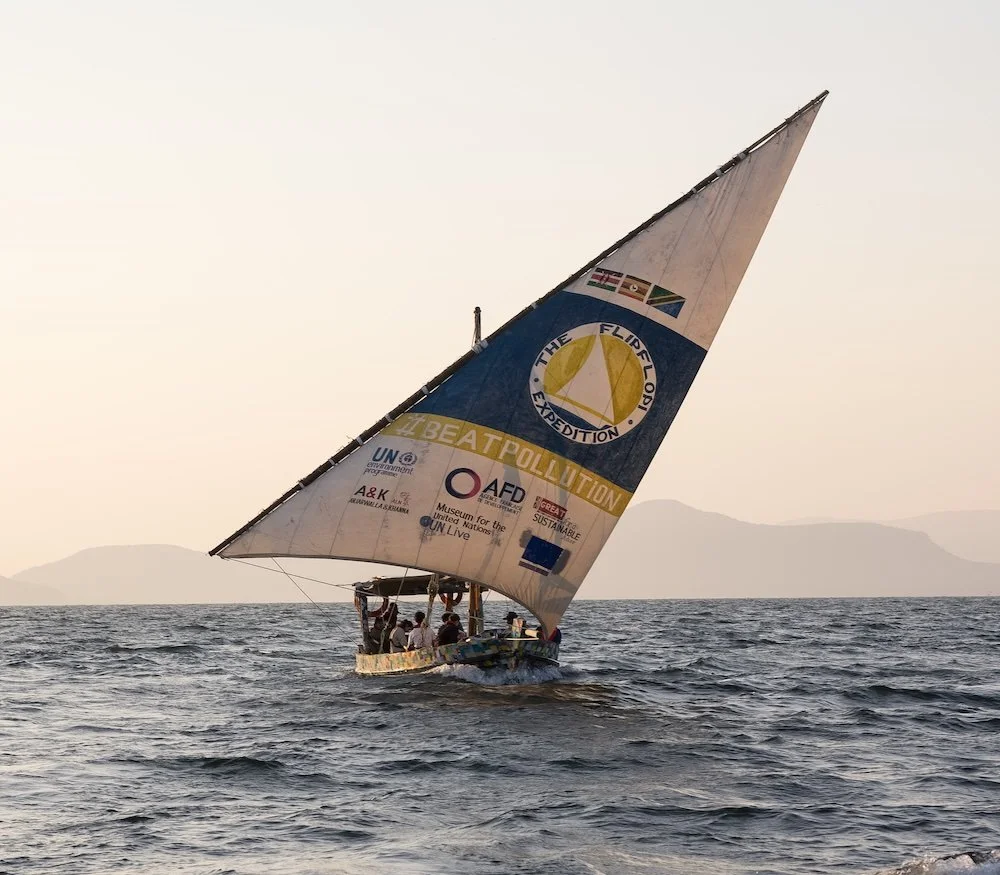
Flipflopi Ndogo sailing on Lake Victoria
In 2016, Flipflopi launched with a simple but radical idea: that waste could be transformed into opportunity, and that communities could lead environmental solutions. What began in Lamu has grown into a decade of learning about systems change, culture, and the ocean that connects us all.
Over the past ten years, Flipflopi has learned that the Lamu Archipelago offers a powerful lens into some of the world’s most urgent and interconnected challenges. Here, the impacts of climate change, pollution, habitat loss, and social injustice are deeply visible, but we can also see the pathways to solutions.
Rising from the beautiful yet waste-strewn beaches, mangroves, and villages of Lamu, Flipflopi began with a clear mission: to end single-use plastics and ensure that all remaining plastics are kept in circulation as part of a circular economy. The Flipflopi Ndogo (the small one) is our symbol to the world that plastic is too precious a material to use once and discard. If you can make a boat capable of sailing thousands of kms out of used plastics, single-use simply doesn’t make sense.
Setting Sail to Create Impact
Since launching Ndogo in 2018 she has sailed from Lamu to Zanzibar, circumnavigated Lake Victoria, and journeyed overland to campaign for an end to single-use plastics at the United Nations Environment Assembly in Nairobi.
By harnessing indigenous knowledge and revitalising artisanal heritage skills, particularly in design, carpentry, and traditional boatbuilding, we have paired local expertise with science, engineering, and technological innovation. The result has been circular plastic recovery systems that work for the benefit of communities, turning waste into value while creating livelihoods rooted in place and culture.
What started as an innovative, low-tech, and symbolic action has grown into a model that brings together academic research, sustainable development, and social enterprise.
To date, we’ve removed and repurposed over 400 tonnes of plastic waste from rural communities across Lamu County. Alongside this on-the-ground impact, our work has helped inspire policy dialogue and action on the global plastic pollution crisis, which continues to disproportionately affect shoreline communities across the Global South.
This journey has been made possible through long-term partnerships and support from organisations including the United Nations Environment Programme, UK Aid, the International Fund for Animal Welfare (IFAW), CMA CGM, the Oceans Grant Programme, Northumbria University, ALN Kenya, and hundreds of individuals.
Ten years and four vessels later, boatbuilding and expedition sailing remain central to who we are: a living expression of learning, connection, and the belief that solutions to global challenges can be built from the ground up.
Why Monsoon Rising, Why Now
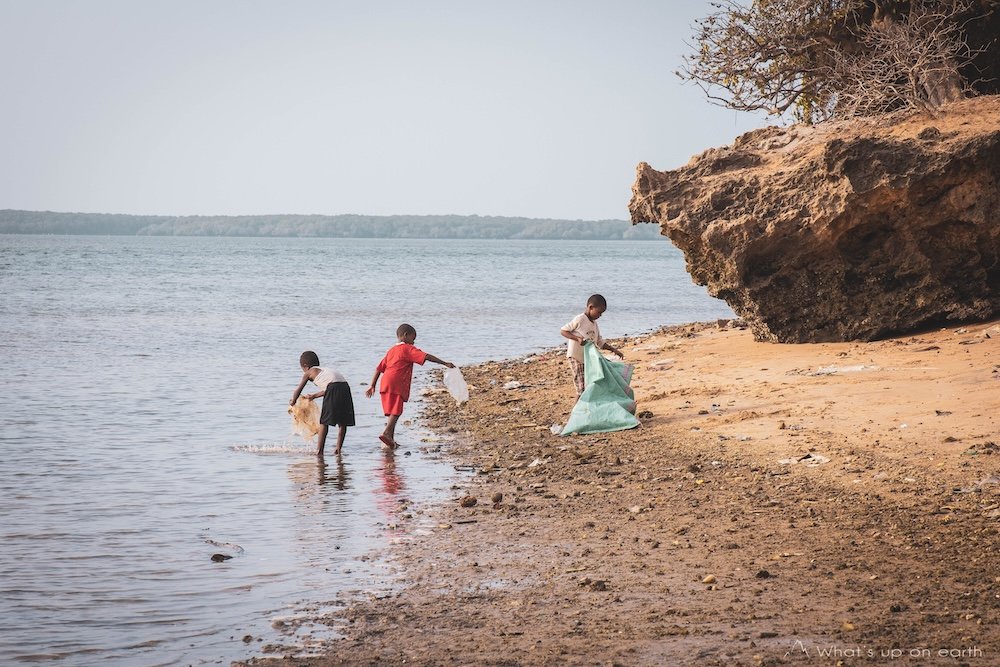
At the heart of Flipflopi’s story is our connection to the Indian Ocean. It was the ocean that first inspired us to build a boat made entirely from waste plastic, covered in discarded flip-flops; the remnants of single-use consumption that wash up by the millions on beaches around the world and gave Flipflopi its name.
It was the monsoon winds of the Indian Ocean that created Lamu’s rich Swahili culture, bringing together language, design and flavours from all over to this little archipelago on Kenya’s north coast.
Those same winds also carry a more complex history of exchange and power, a reminder that connection has not always meant equality. This reality is echoed today as our coastlines bear the visible traces of global consumption.
For us, this next chapter is about protecting the Indian Ocean (and beyond) as a living system, one that connects East Africa and the Middle East through shared ecology, heritage, and responsibility. It brings together communities, conservation, storytelling, and innovation to care for marine life and the people who depend on it.
The challenges facing our ocean - plastic pollution, overfishing, habitat loss - are symptoms of extractive systems that don't recognize borders or consequences. Real solutions require building regenerative alternatives that bring together communities, conservation, storytelling, and innovation. Only then can we restore marine ecosystems and the livelihoods that depend on them.
Monsoon Rising was born from the understanding that protecting the ocean requires working across regions, disciplines, and communities, while staying deeply rooted in place.
Introducing Kubwa, the Voyage
At the heart of Monsoon Rising is Kubwa (the big one), our symbol to the world, that has always guided our global direction.
Kubwa will be a 24-metre recycled plastic traditional dhow that will sail the ancient monsoon routes as a symbol of learning, partnership, and connection. This dhow will be made from sixty tonnes of discarded plastic from across Lamu. This is more than just an engineering feat - it's proof that communities can transform extractive waste into regenerative value, reclaiming heritage in the present and future.
Sailing along ancient monsoon trade routes, Kubwa will bring together communities, scientists, artists, and policymakers to explore what true ocean stewardship can look like.
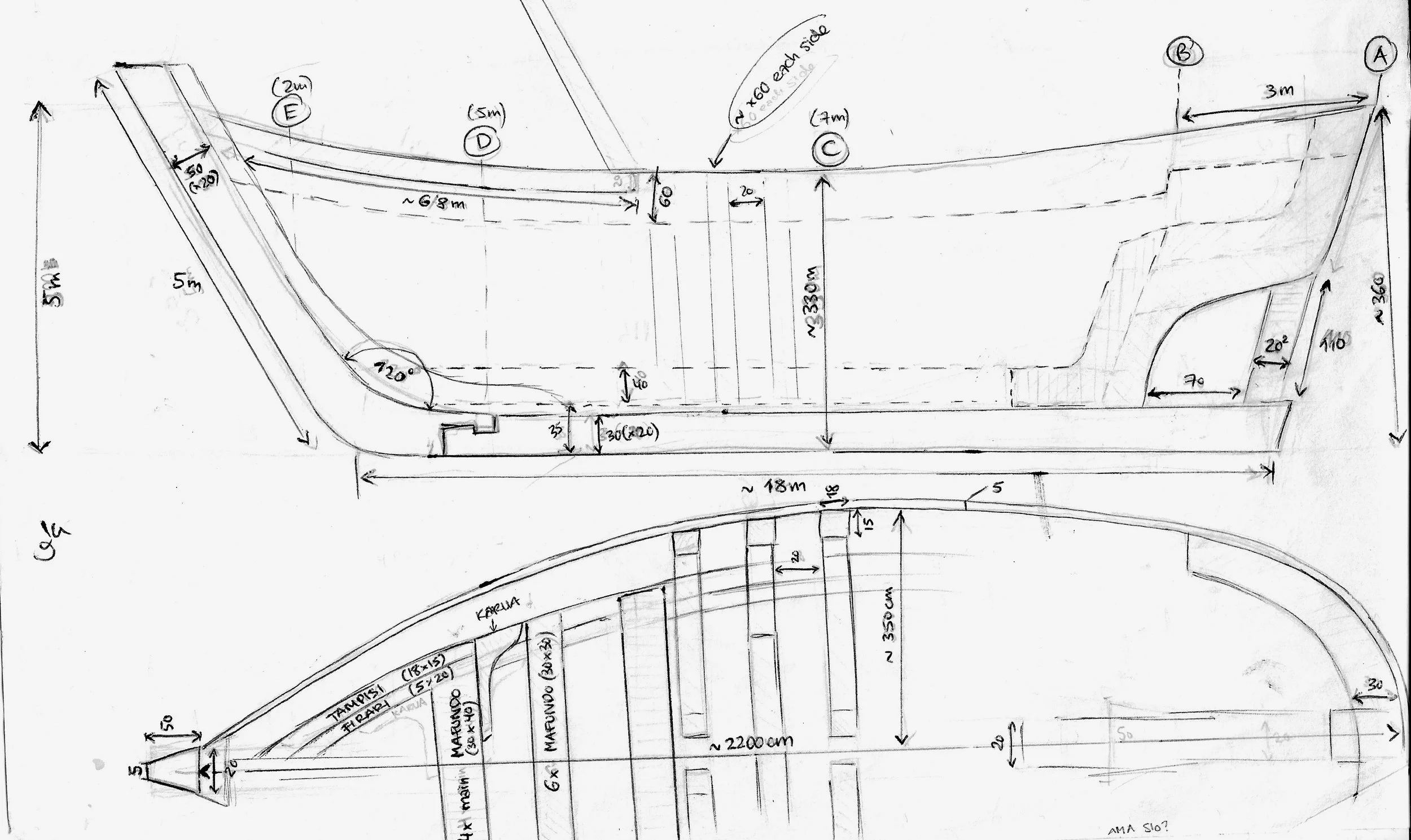
Handrawn sketches of Kubwa
Storytelling has always been as fundamental to Flipflopi as boatbuilding - it's how local solutions become global movements and inspire policy change. It’s more than communication: it's cultural reclamation and economic empowerment.
That's why we're launching the Flipflopi Ocean Storytellers Initiative, to work with our youth who will document Kubwa's journey and control how our community's story is shared with the world.
Through this film school, local storytellers will document the journey, ensuring that this story is told with authenticity, dignity, and care.
An Invitation
Monsoon Rising is not a finished plan. It’s a living journey.
We invite you to watch the film, follow the voyage, and be part of shaping a shared future for our ocean.
With huge thanks to our incredible director and producer Beccy Strong for creating our new film.